Discovering deep history in London
An unexpected thing happened to me on my first trip to London earlier this month.
I stayed in Brick Lane close to the venue (which I will write about separately!) for the event I put on. The first four days I stayed in the area prepping for the event and meeting people, so pretty much just work work work… but after the event was over (and I finally got a full night’s sleep) I had 3 days to explore the city, which I did mostly on foot.
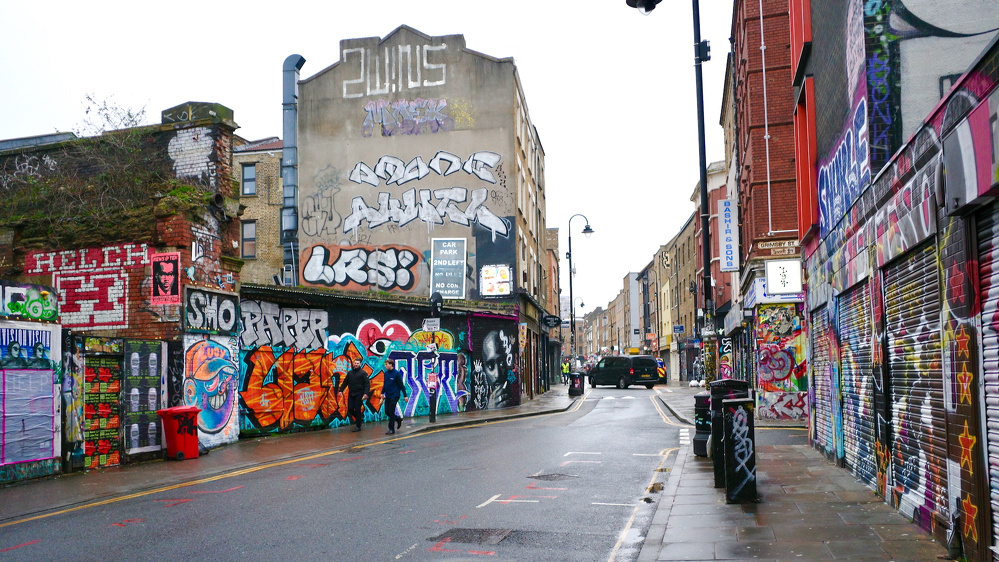
But first: laundry. Winding through the narrow spray-painted lanes of Shoreditch I stopped in at a non-profit laundrette established in the Nineties by the surrounding council estates. The laundry ladies were working hard folding and making change for estate folks dropping off their clothes. While I waited the ladies stepped out for a smoke. One was very thin with yellowed finger tips and grey hair. We got to chatting and I when she found out I was a first-timer from far off Vancouver she gave me all sorts of advice on how to stay safe in the grimy streets of the metropol. 😊
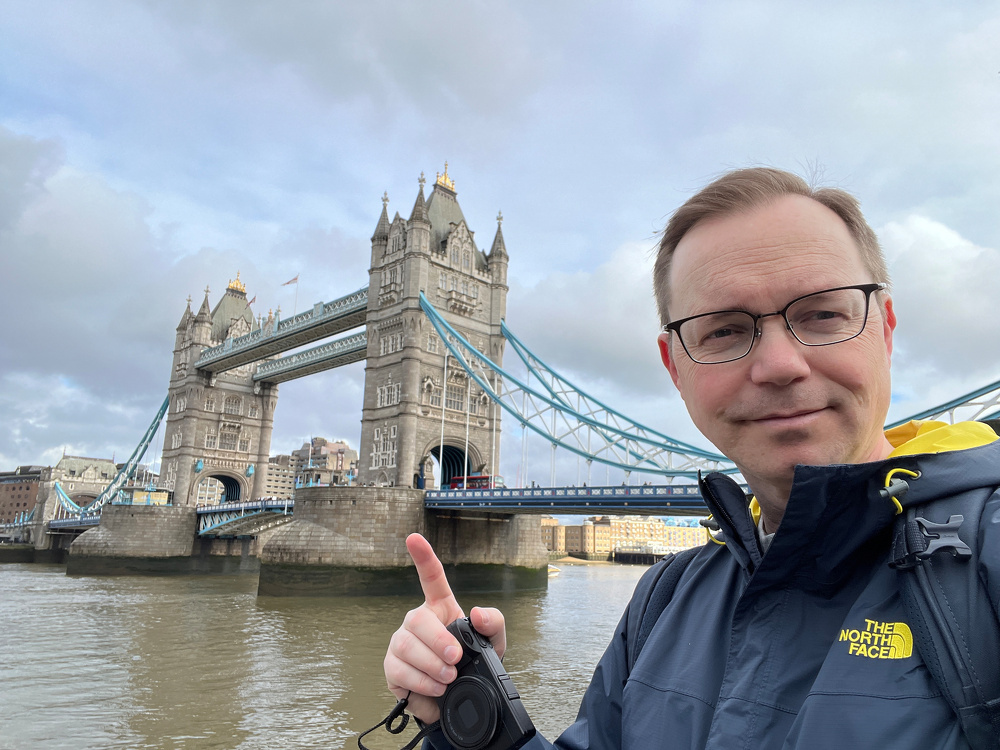
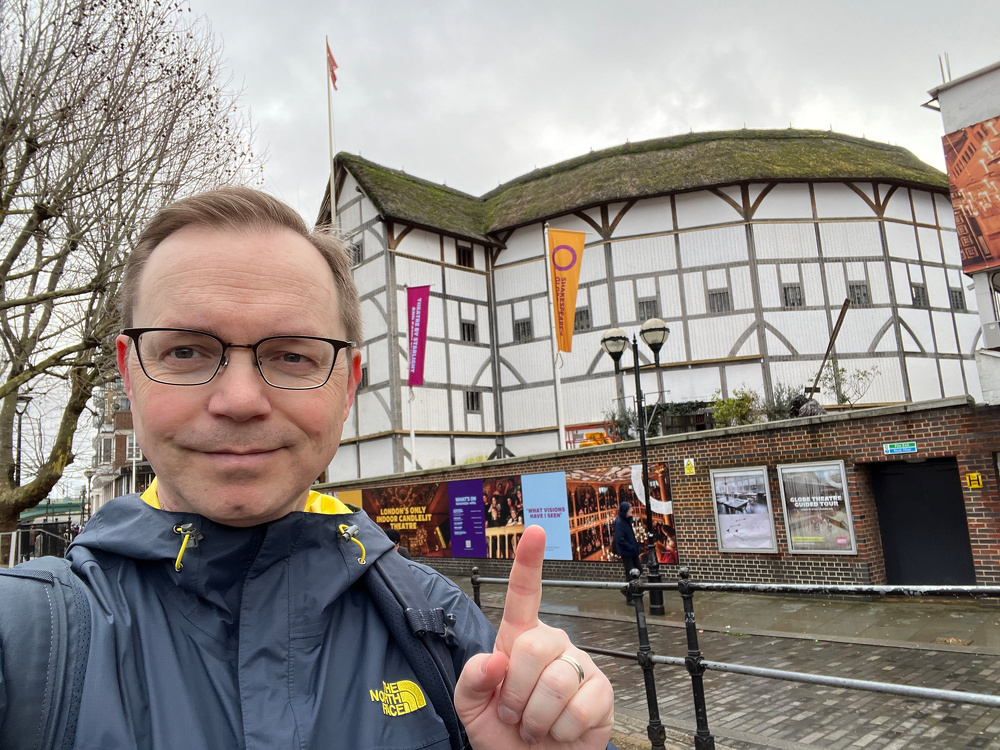
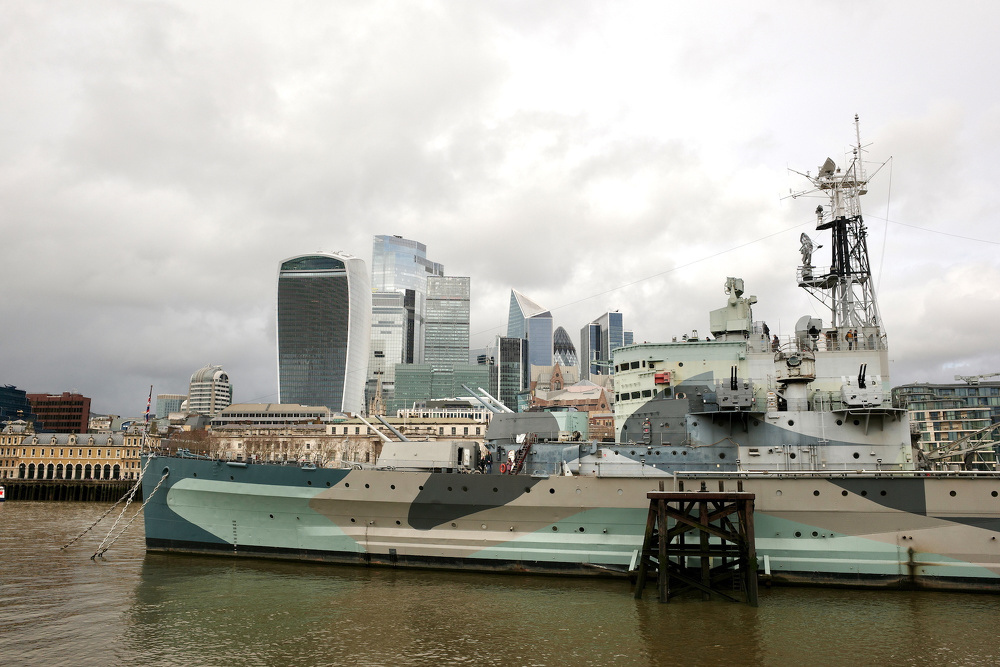
Dropping off my clean clothes back in Brick Lane I took off on foot through White Chapel, across Tower Bridge, and along the south bank of the Thames. It was cloudy but thankfully not raining. Passing the other tourists I heard conversations in many languages that I could not even identify. From the south bank I photographed The City as a backdrop to a warship turned into a floating museum, satisfied with the capture of “War and Finance” in a single representative photo. Further along the south bank I squeezed through the throngs at Borough Market and into old palace grounds re-developed into a polished shopping area for tourists, framed by the still standing walls of an ancient cathedral. A dungeon near Dirty Lane had been transformed into a shiny tourist museum. Still further along is The Swan and the Globe Theatre where I popped in to check out the Shakespeare merch in the gift shop. A light rain and sore feet convinced me to take a rest and see some art in the Tate Museum of Modern Art, which is a massive factory of creativity. I spent a little over an an hour wandering the galleries and the book store. The Tate is inspiring, but at the same time I felt dejected by my own lack of creative output. Sitting in the Tate cafe with coffee and cake I reflected on this while charging my camera. Already I had taken hundreds of photos.
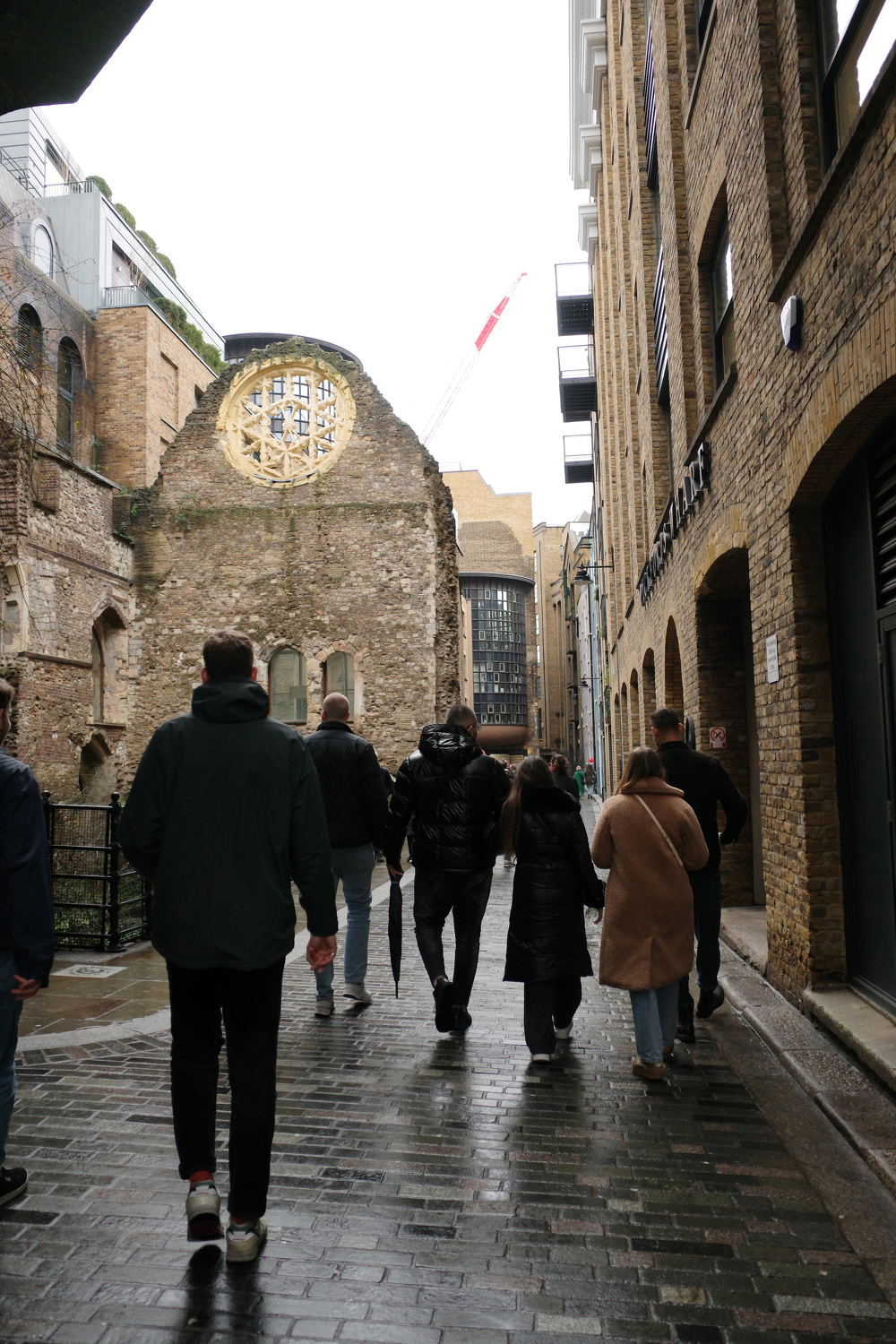
London is a very spread out city and its downtown core is not dominated by skyscrapers like Tokyo or southern Manhattan, or even little Vancouver. And with 2000 years of history you can’t just be digging deep holes here and there to put up such huge towers. Most of the buildings are quite low, and London’s density is comparable to Vancouver and Kyoto. New York is twice as dense as all those cities.
Despite being spread out, the downtown area is perfectly walkable like an old Roman city. And every street corner seems to have multiple historical stories layered upon one another, whether an incident from the bombings of WWII, to an incident from the 16th C, all the way back to the founding of Londinium. North American cities, especially in the west, are so youthful in comparison.
St Paul’s and Big Ben
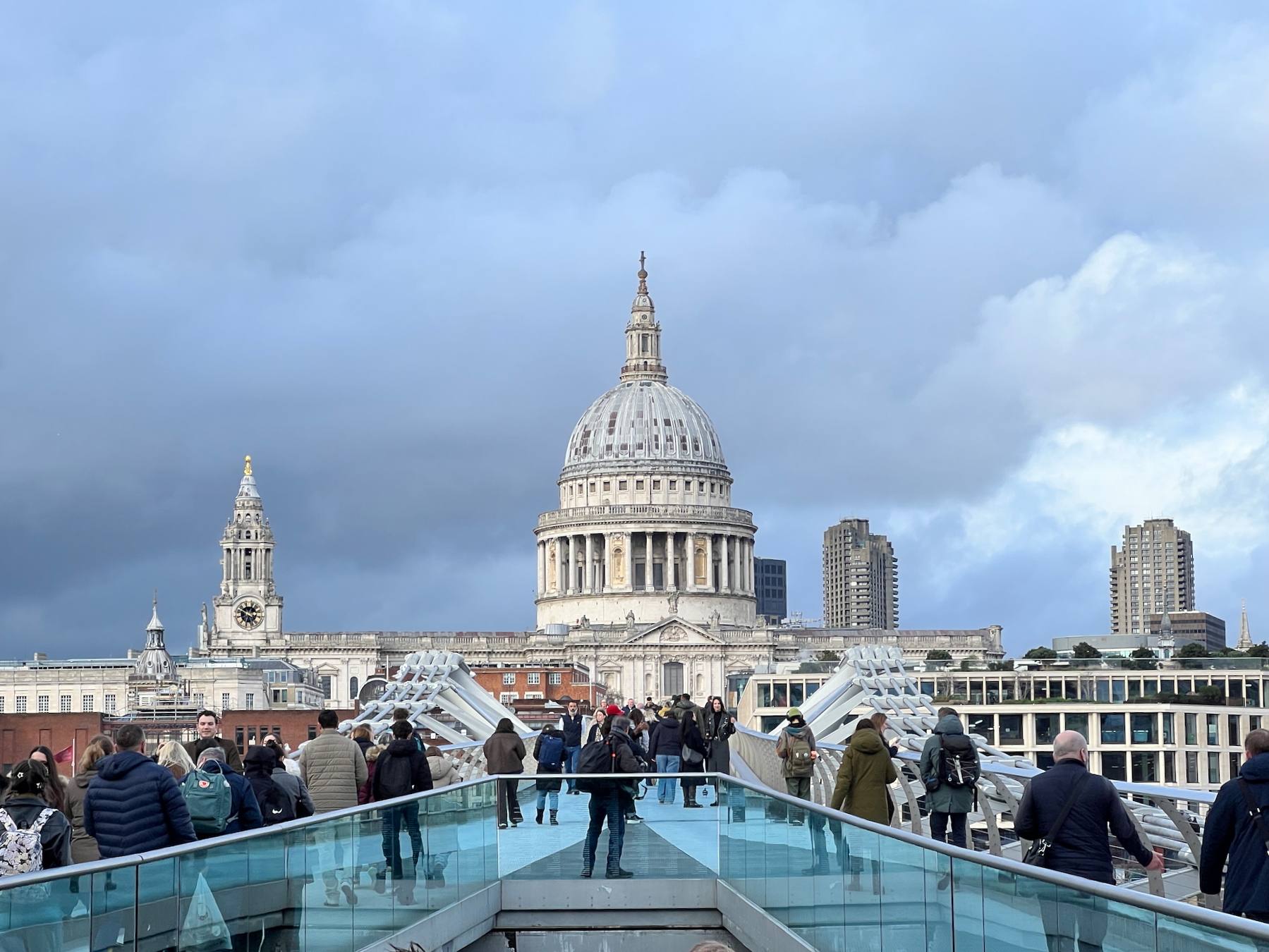
The sun came out and the rain lifted so I made my way across the Millennium Bridge to St Paul’s Cathedral. Originally founded in 604, the cathedral burned down many times and in the late 1600s was redesigned by Sir Christopher Wren into the domed masterpiece we see today. Only expecting to pop in and have a bit of a wander, I spent nearly three hours admiring the architecture.

📸 See the full St Paul’s album on Flickr →
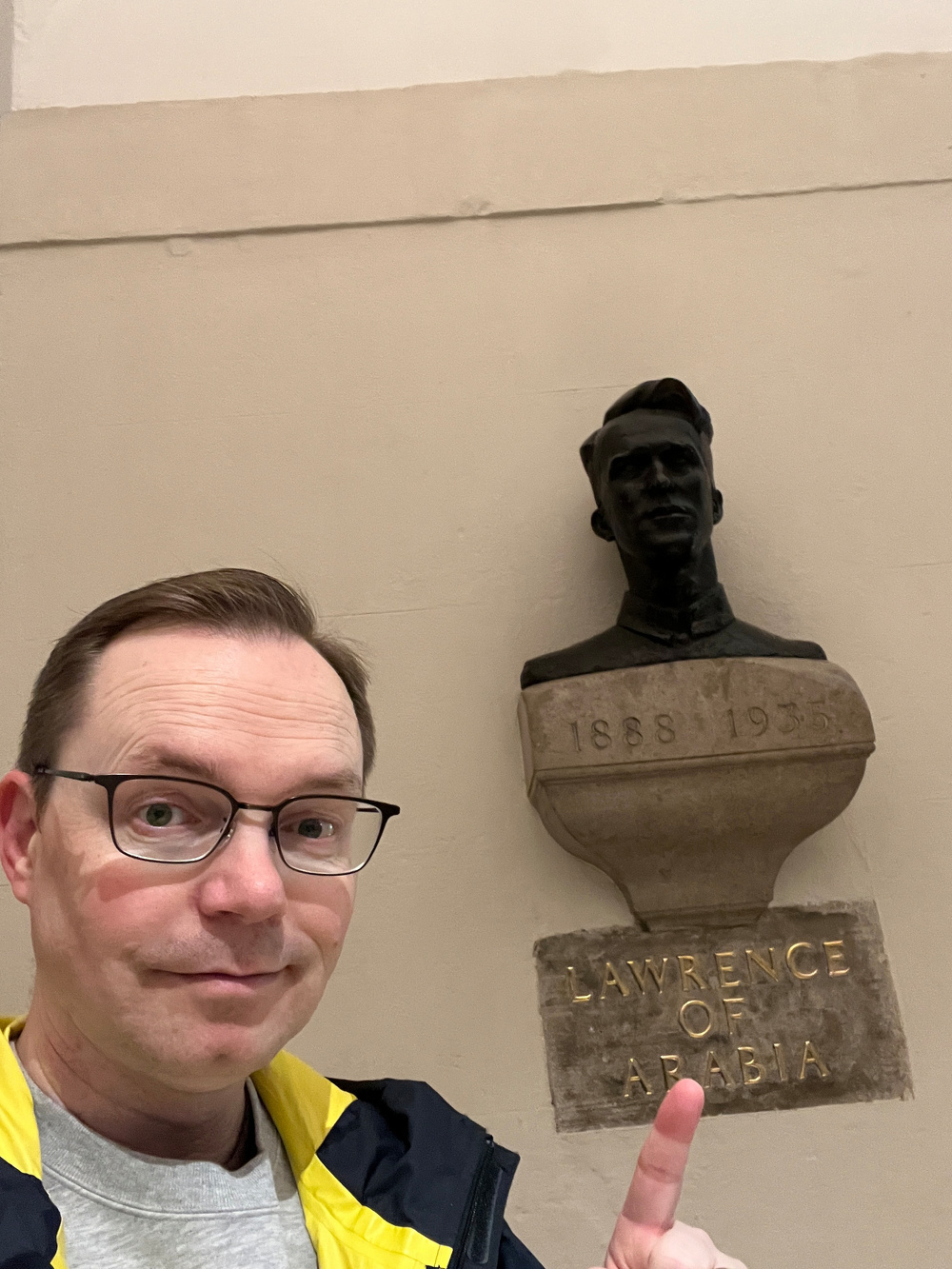
Walking down into the crypt I wandered amongst buried historical figures like Horatio Nelson and the Duke of Wellington. There are many memorials adorning the walls such as to Florence Nightingale. I took a selfie with a memorial bust of T.E. Lawrence (the subject of some of my writing at RMC) and even spotted a bust of John A MacDonald, Canada’s first Prime Minister. There are also many memorials to World War II as the cathedral is one of the most powerful symbols of British resilience of that time. In fact, the whole building is a war memorial.
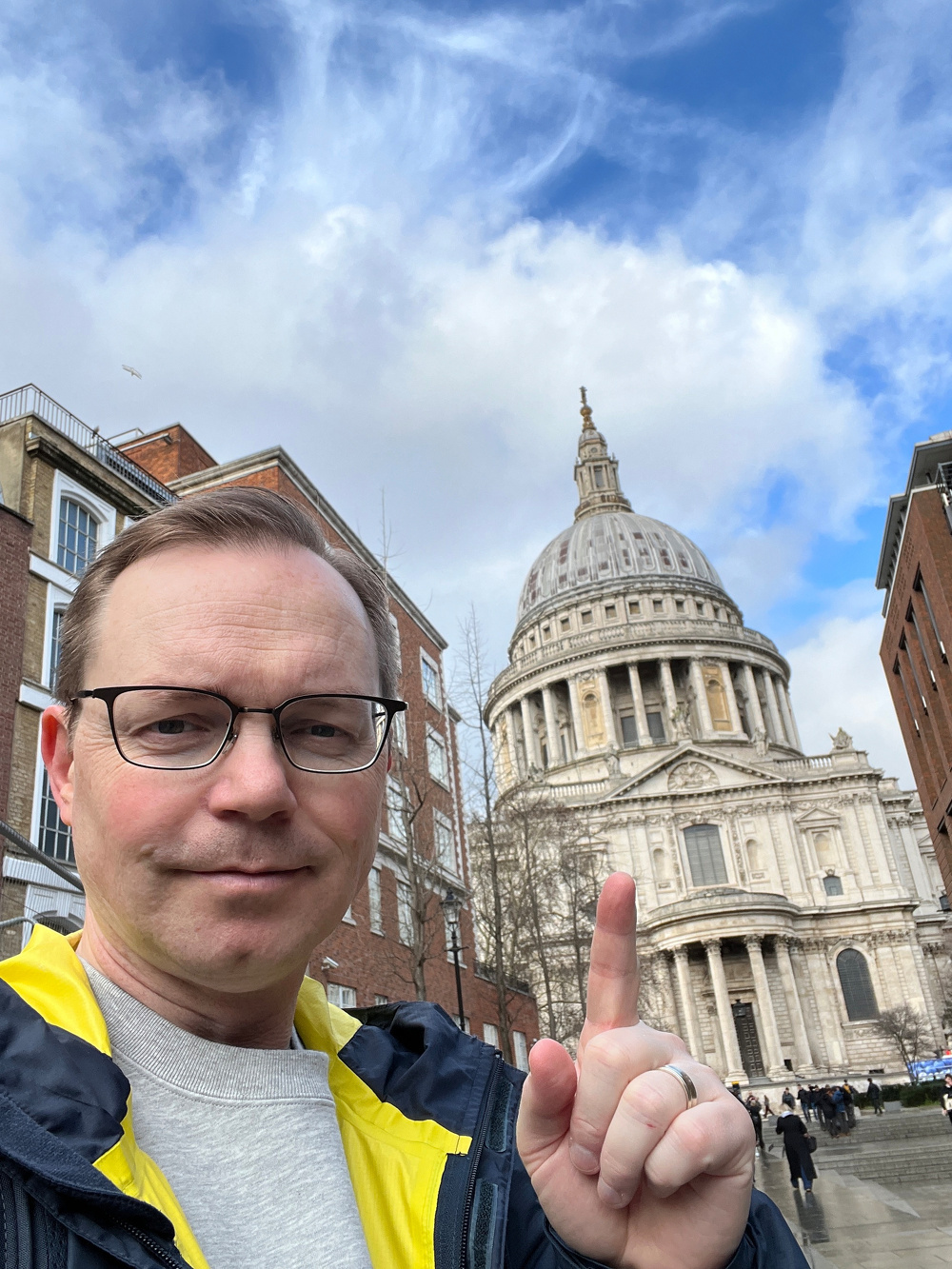
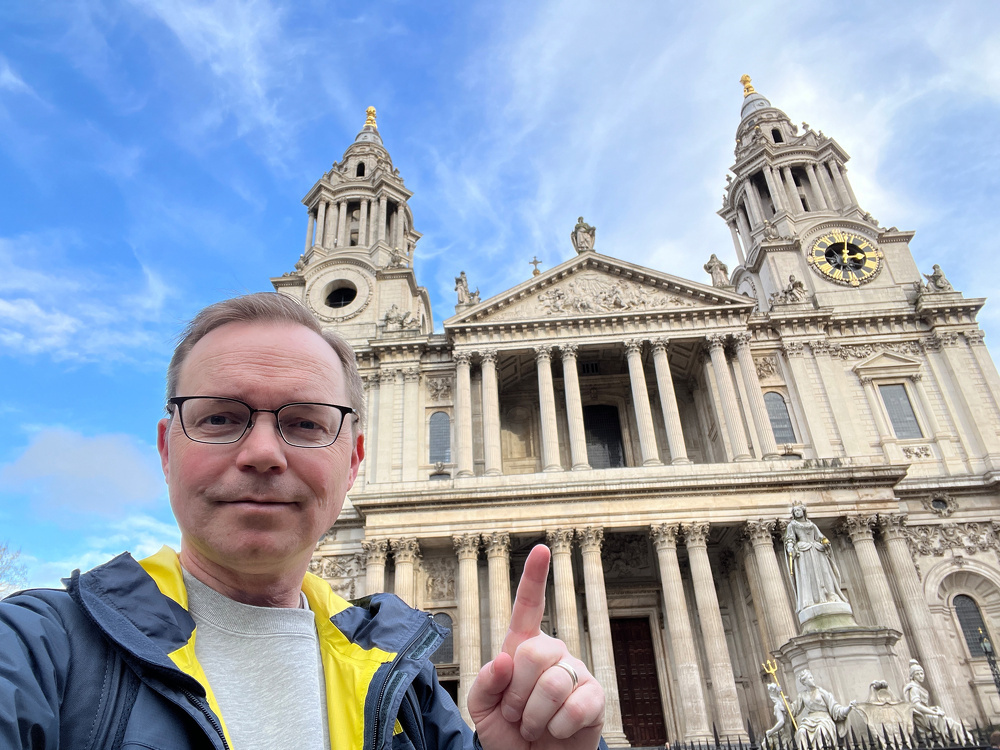
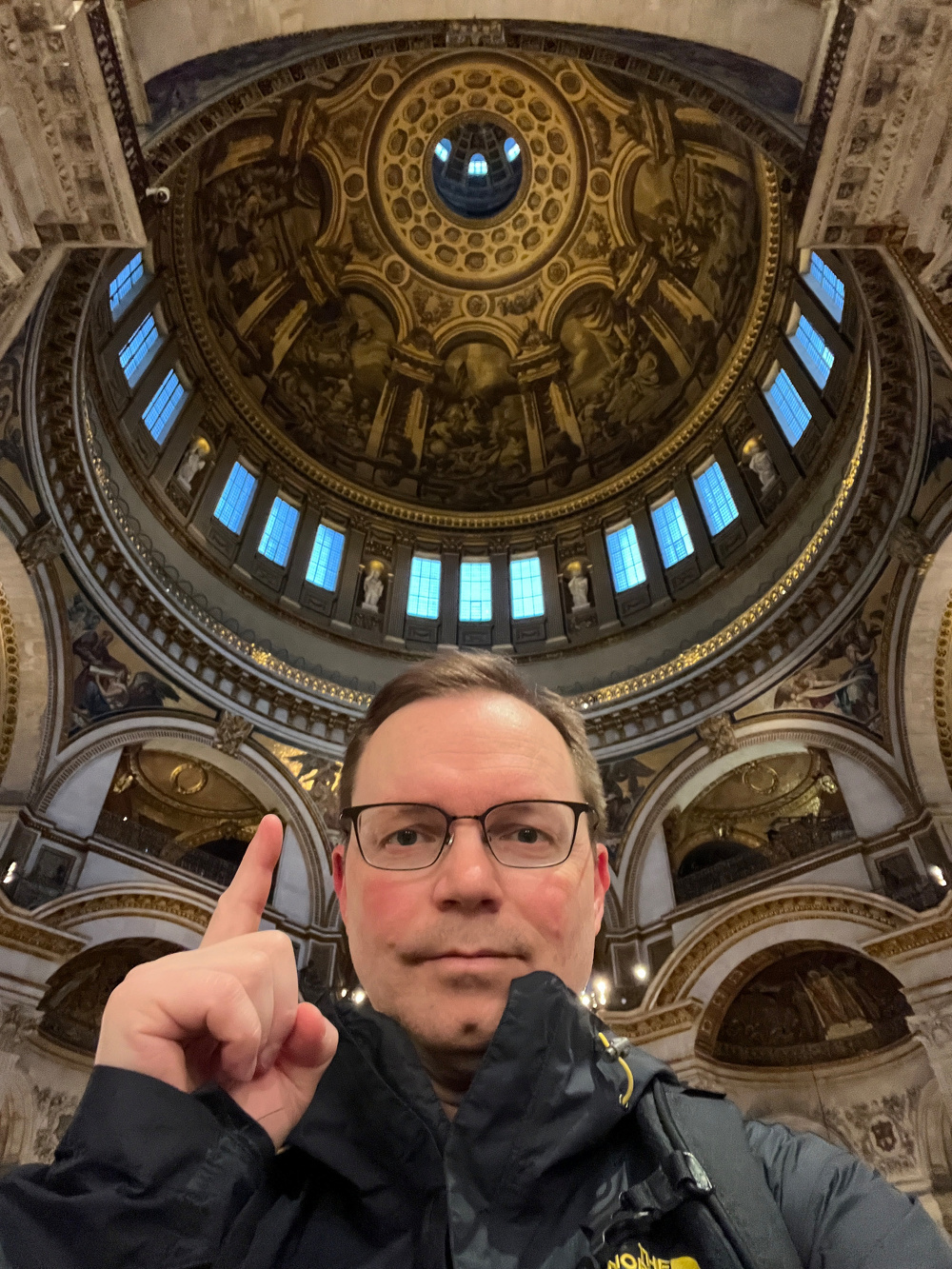
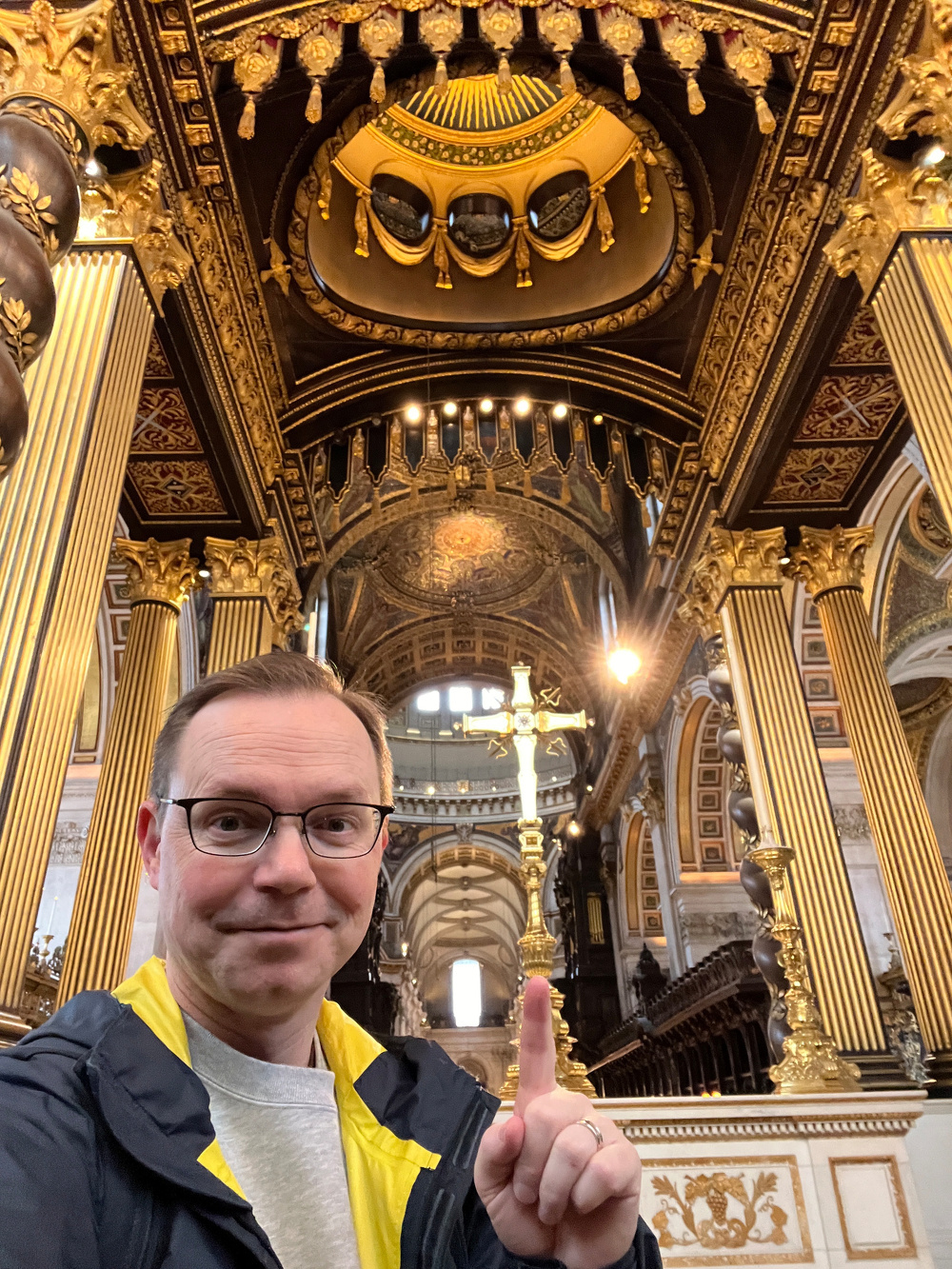
Climbing up up up the stairs I sat quietly in the uncanny Whispering Gallery before going up up up again to the roof outside the dome to view the City, then up up again to the very top of the dome for a spectacular view of London. How did the city change since late 17th century when they were building this dome? Or compared to the 6th century when this was just a church on a hill?

As a kid growing up in the Canadian Rockies the log house that my grandfather built by hand and raised nine kids in seemed ancient. I mean, my dad had to haul water from the river every day for the family. They eked out a living in the bush in the 1950s and 60s while we had running water where I grew up in town in the 1980s — a world of difference in just one generation.
Living in historical cities like Kyoto and visiting places with layers of history like Istanbul or Lisbon or Kashgar or Mumbai greatly expanded my perception of living with history. But for me London is different to all those romantic and exotic cities. England is the first country I have visited other than the United States that is primarily English-speaking. Like many Canadians, I grew up with British television mixed in with American and Canadian media. Three out of four of my grandparents have British ancestry. Before visiting I could not tell you the names of the main boulevards of those historical cities I travelled to. But leaving St Paul’s and walking down Fleet Street and the Strand in the rain, it started to dawn on me the connection I have to this not-so-foreign country. I turned south towards the Thames and passed King’s College London, a school I nearly applied to a couple decades back. Walking the north side of the river the sky to the west began to clear. As the sun started its descent it illuminated Cleopatra’s Needle in a warm light just in time for a Golden Hour selfie. I detoured slightly to snap a photo of (the surprisingly small) memorial to the Imperial Camel Corps before walking over the Golden Jubilee Bridge and getting a nice late afternoon view of St. Paul’s and the City from where I just came.
Back on the south bank I could already see Big Ben in the distance. Passing under the London Eye Ferris Wheel, I weaved through the throngs of tourists and under Westminster Bridge to get some evening shots of Westminster and its famous clock tower. On this side of the Thames is a new monument: the National COVID Memorial wall, covered in hearts and messages to lost loved ones. A heartbreaking scene and another layer to the city’s long history.
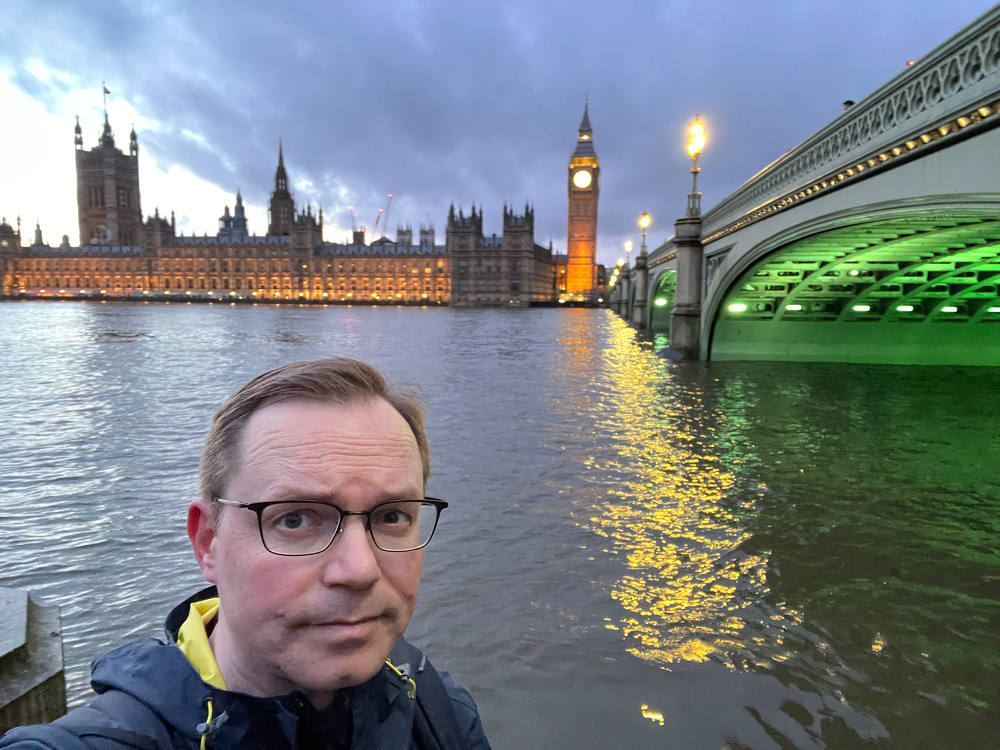
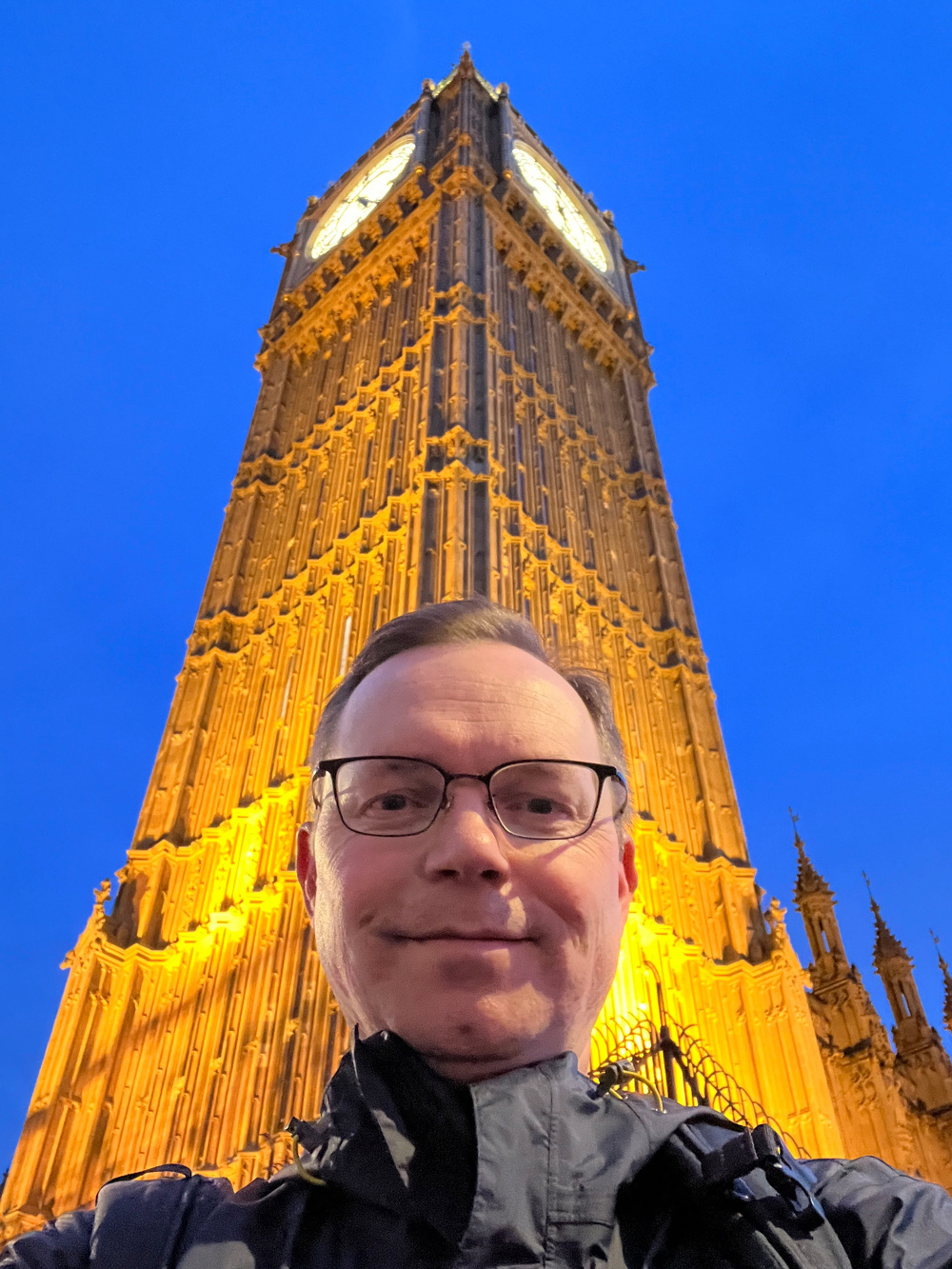
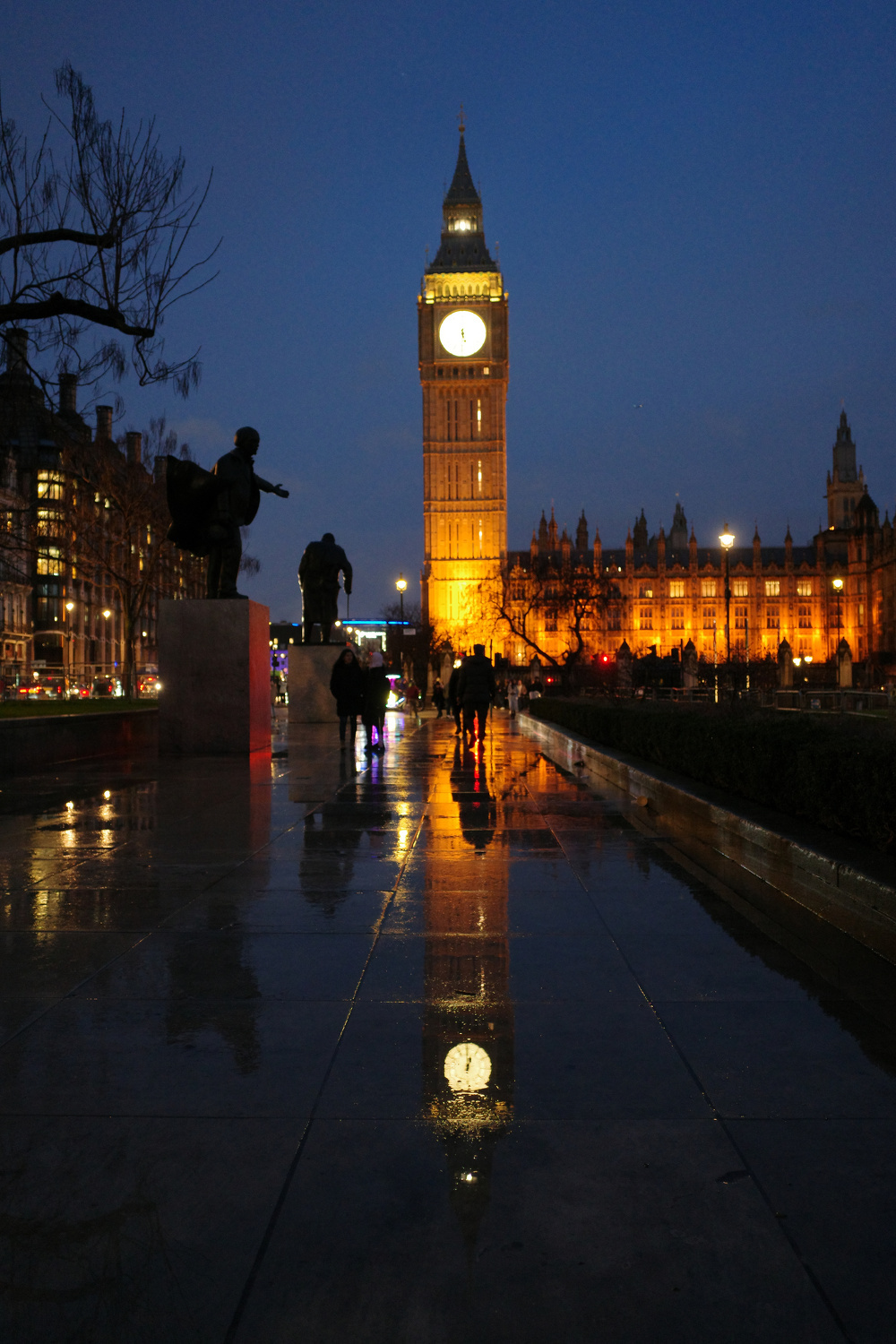
By the time I crossed the final bridge of the day and took some selfies with Big Ben it had gotten dark. Westminster Abbey was closed to visitors so I had to be satisfied with some exterior photos before grabbing my first London cabby to Harrod’s department store. (My wife had been here when she was younger and wanted me to show her what it was like now.) After a very expensive tea and salad for dinner in the Harrod’s cafe, I made the final leg of my journey to posh Sloane Square. These streets had quite a different vibe from the non-profit estate laundrette where I started my journey in the morning. I did not tarry long and took the metro back home to Brick Lane.
Edge to center
My first day walking London was filled with sights. The second day was by comparison a much simpler agenda: a trip to North London for a tour of Tottenham Hotspur Stadium, and then back to the City to photograph some funky-shaped skyscrapers.
First, the stadium. The Weaver Line from Liverpool Station to White Hart Lane is an above ground train affording views of different London neighbourhoods as you head out of the city: neat rows of narrow back gardens, curving streets of row housing, factories, and the occasional park passed below. It struck me how little seemed strange or out of place. Of course it was different from Canada or Japan, or any of the other places I have been. But my travel experience has been about going to places that are vastly different to me, and I was struck by my feeling of cosiness.

Tottenham Hotspur Stadium, rebuilt on the site of the original White Hart Lane stadium a few years ago, is home to the Premier League team I have followed for more than two decades but have never seen play in person. The team was up in Manchester while I was in London, which was disappointing, but gave me an opportunity to do the tour and be amazed by the most advanced football stadium in Europe, if not the world. The Spurs staff did an excellent job of welcoming us, and even being from so far away I felt part of the supporter community. I lingered for about 45 minutes on the side of the pitch just enjoying the view and talking to an attendant, quizzing him about being a football supporter from the neighbourhood. I won’t bore you with all the amazing facts and figures (eg. it takes about 2 hours to retract the pitch under the south stand and prepare the NFL field that is hidden underneath… and even below that there is an underground F1 go-kart track!). I took a BUNCH of selfies here with some of the first team player’s jerseys.

📸 See the whole gallery in full screen on Flickr →
After the tour the sun had come out some so I walked the neighbourhood around the stadium. That morning I had a real British breakfast, beans and all, at a local caf called The Tottenham Hot Spud. It was less than half the price of a basic meal in the City. I had my first British pie at the stadium cafe before getting back on the train and heading back to Liverpool Station downtown.
On a Saturday afternoon the City is pretty dead. That’s okay because I was here to capture some of the funky architecture of the London skyline including The Gherkin, The Scalpel, and the Walkie Talkie (Sky Garden). The day before I got some views of The Shard on the south side of the river, but didn’t get close enough to get any good photos.
It is amazing how the wide top of Sky Garden hangs out over the street. Robert Belton on Mastodon told me that the curvature of the building focused sunlight on the street level up to 91ºC! If The Walkie Talkie wasn’t derogatory enough of a name after the fire incident the building was dubbed “the Fryscraper.” 😄
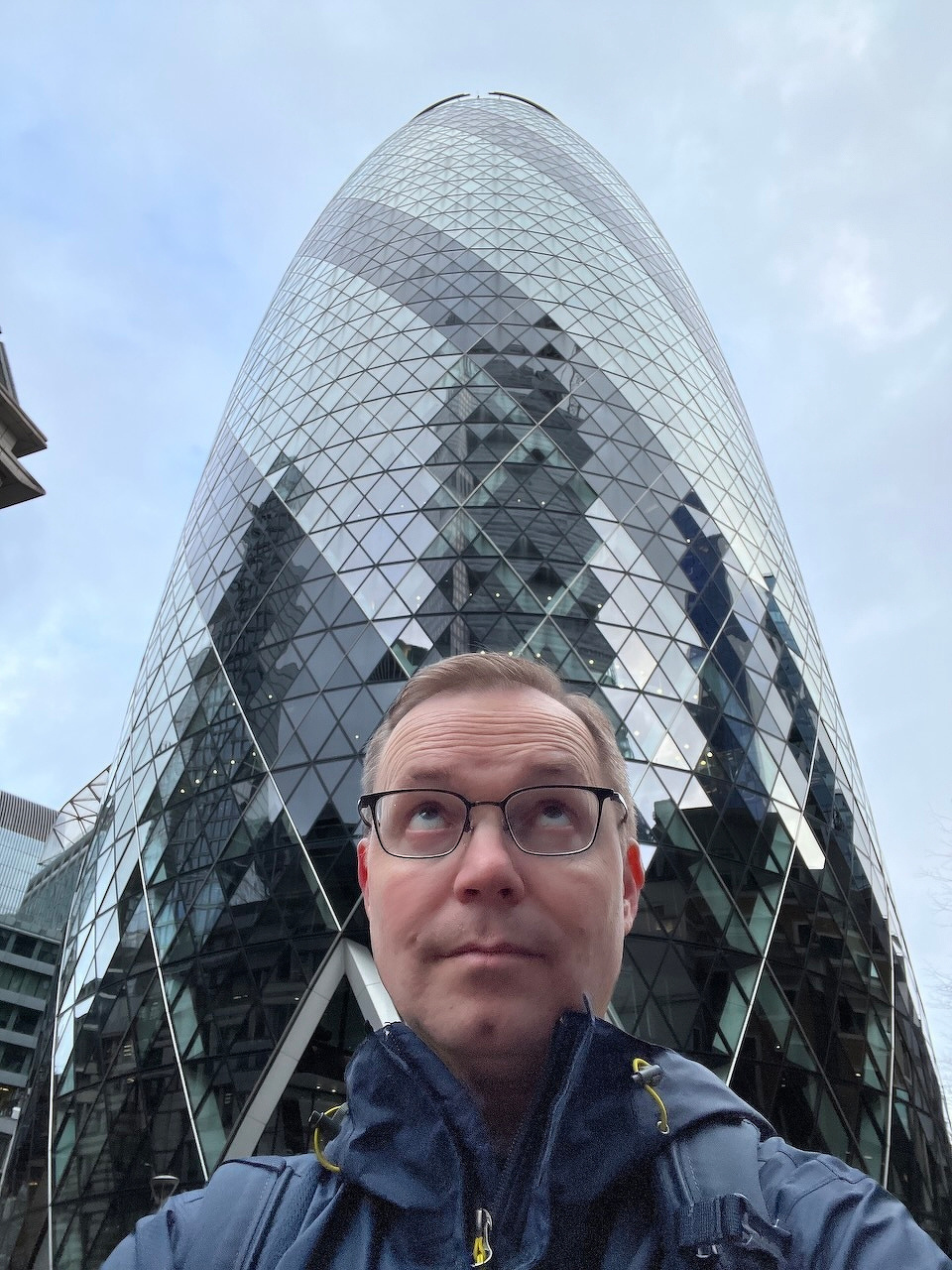
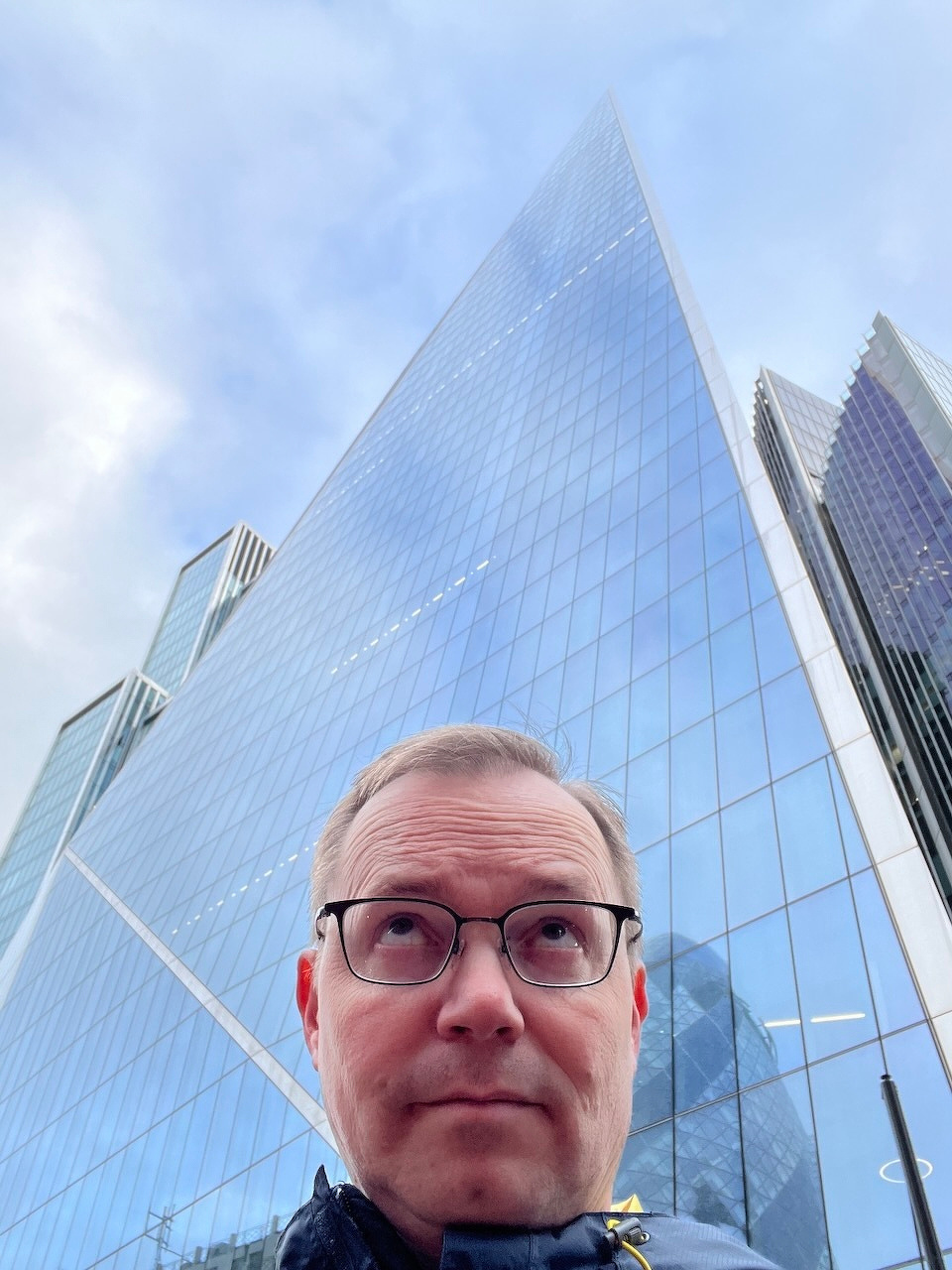
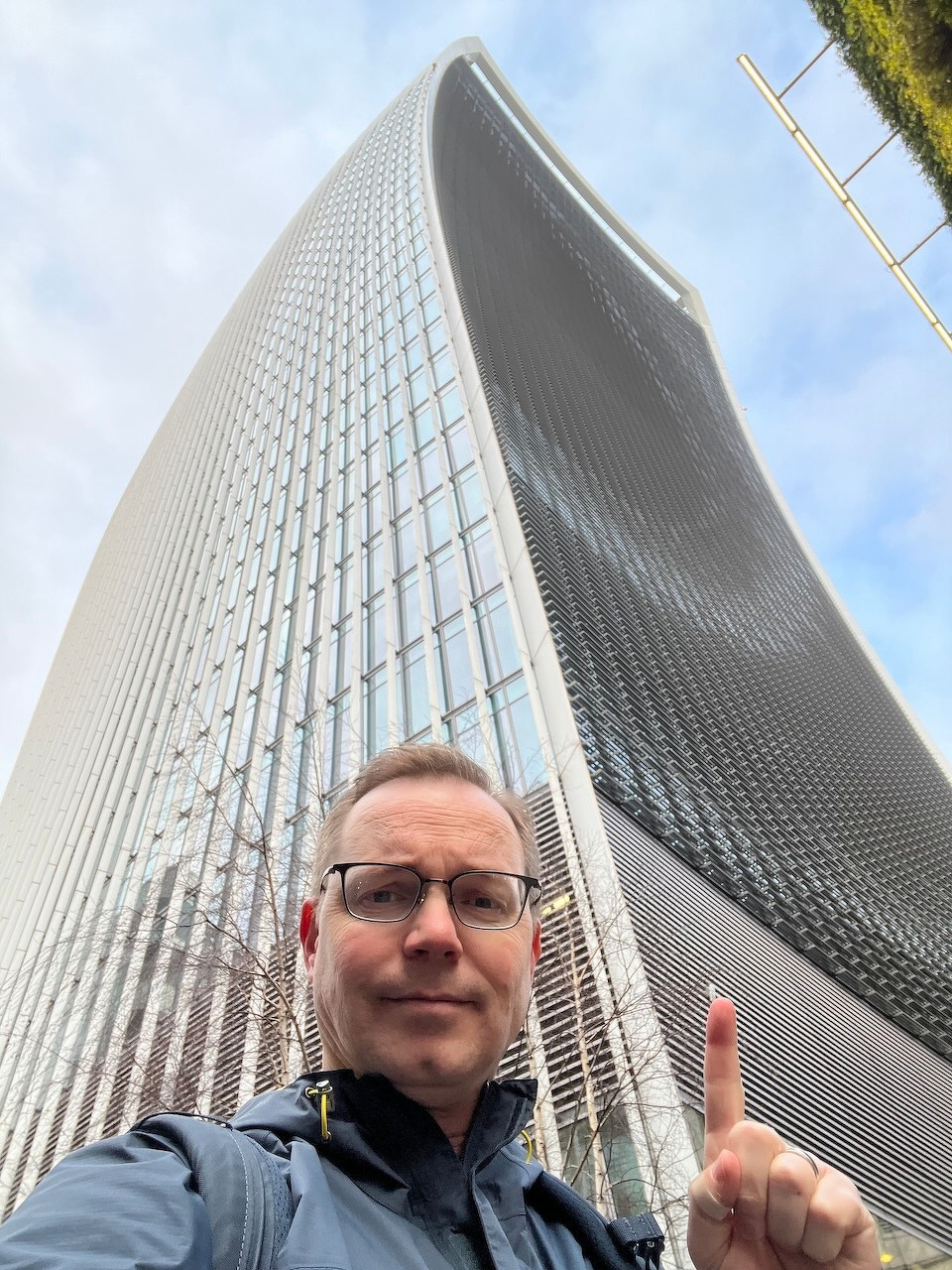
For the rest of my day there was no destination really. I walked side streets, popped into a Waterstones, photographed random cool looking old buildings to look up later. Wandering the narrow medieval streets in some mews I came across the spot where London’s first coffee house was sited. I checked out the memorial for the Great London Fire of 1666, which I thought was just a very tall pillar but is actually massive and a building in its own right that you can go into and climb up for views.
Amazed and dazed at the British Museum
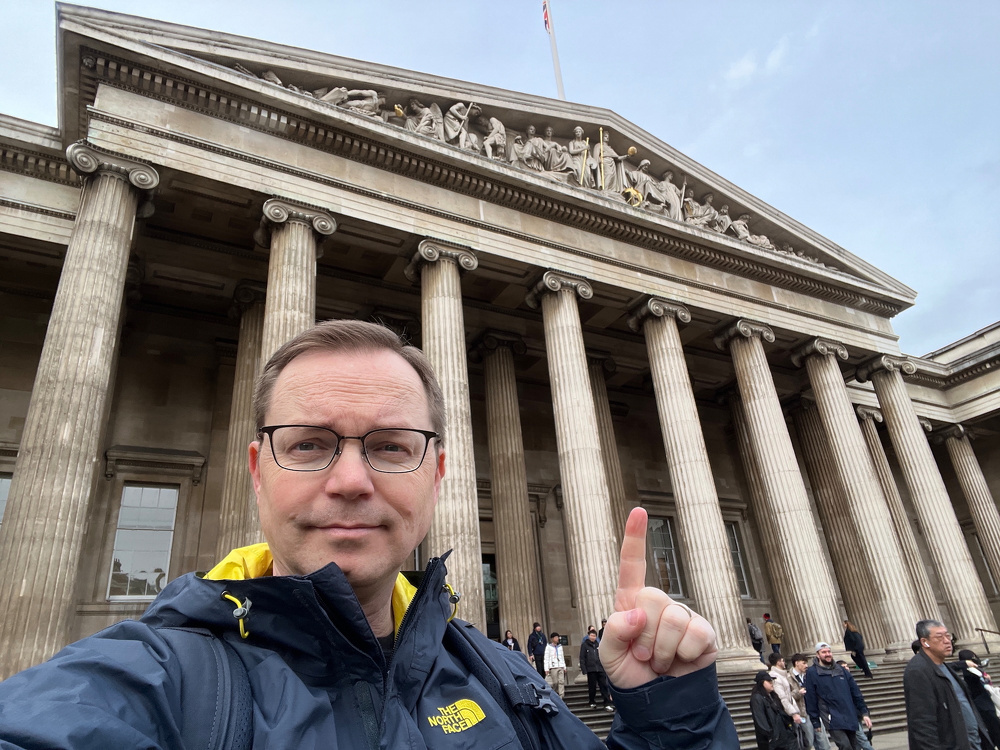
My final day in London was the first thing I planned on doing when I knew I was going a few months back: the British Museum. In the morning I got the train to Tottenham Court Road and saw the Banksy painting there. It was still before the museum opened so I looked for coffee and found a specialty shop operating out of a money changer! The young Turkish guy running the place knew his coffee and we conversed for a bit. I ate my sweet roll and finished my coffee in Soho Square by a 17th C statue of Charles II, and then made my way over to the Museum.
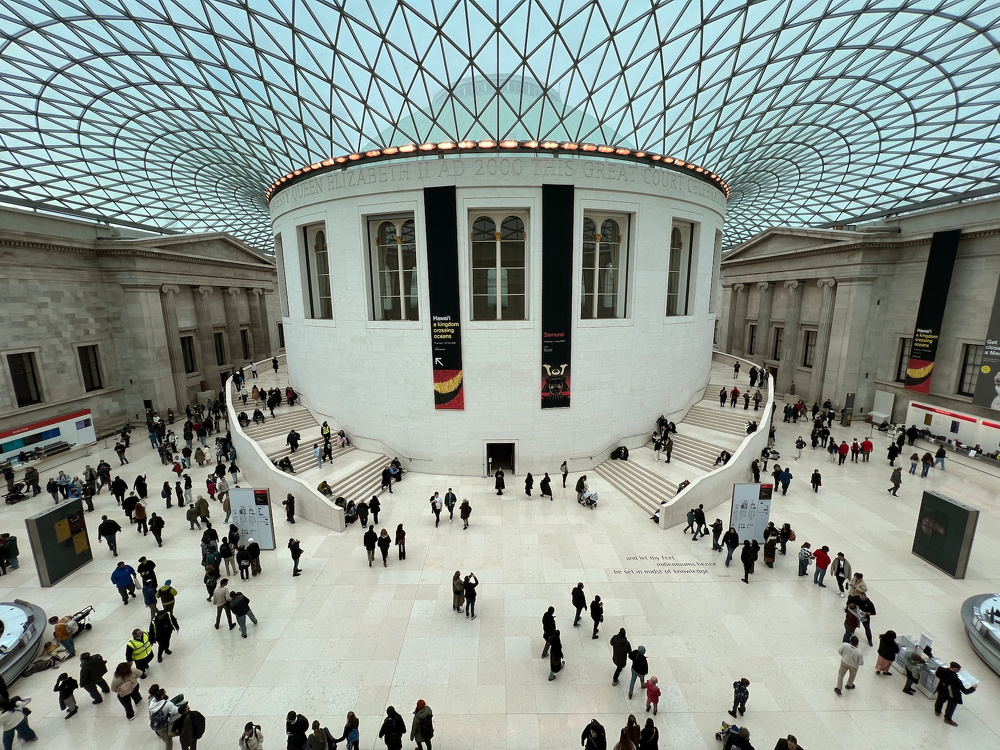
Already there was a massive line of people. The Museum is huge, and largely free (like the Tate Museum of Modern Art). They had two special paid exhibitions, one on Hawai’i and the other on The Samurai (which was partially curated by my moot Oleg Benesch!). But I was here to see the treasures from Babylonia, Egypt, and ancient Sumer. My goal was merely to at least walk ALL the halls… and even that low bar meant I was there for 6 hours. By the 4th hour my head was just full… if you look at the timedate stamps on my camera you will see the number of photos just drop off after hour 4. I was overwhelmed and had to sit down a few times.
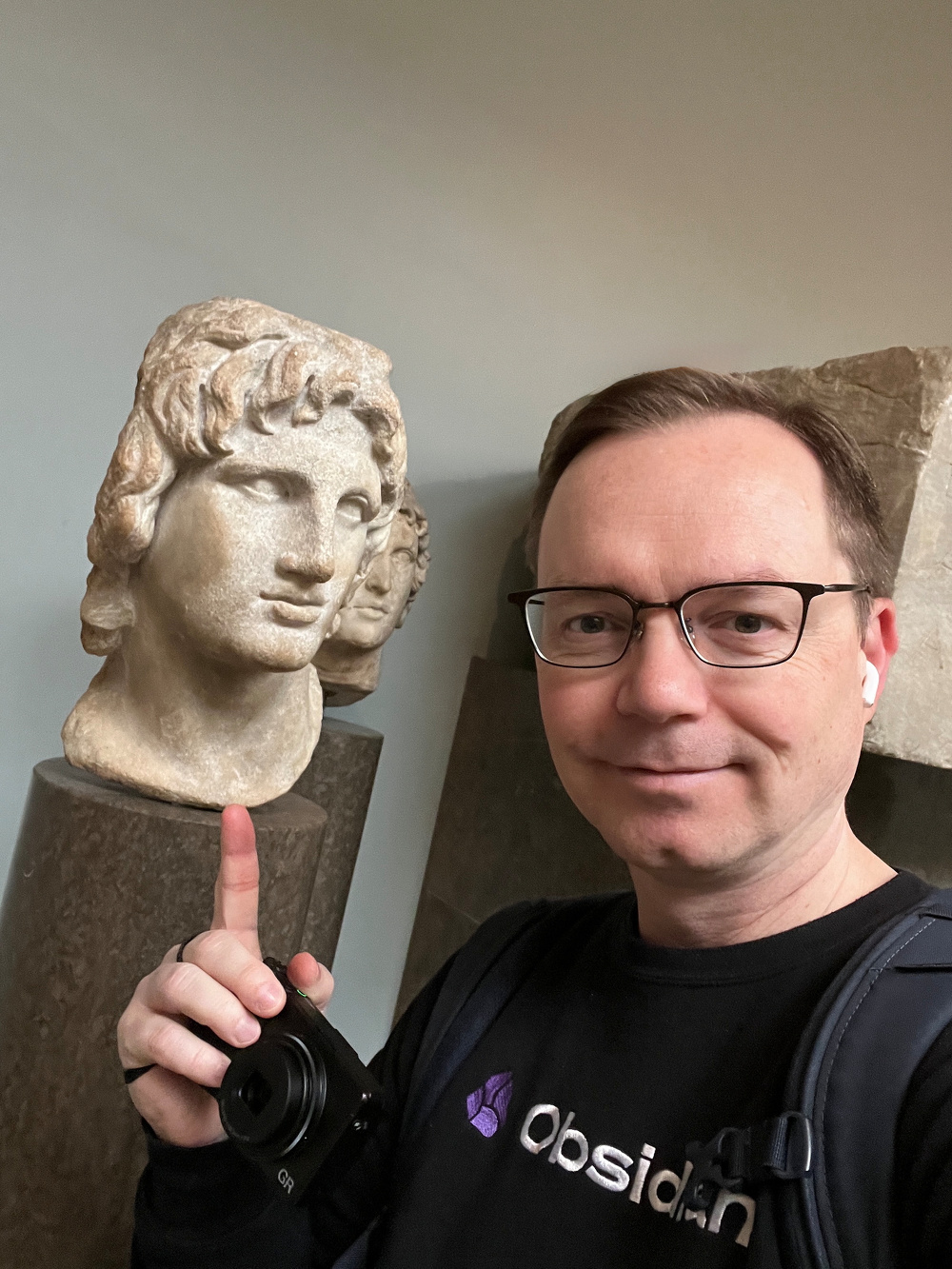
I cannot describe in words the enormity of the Museum and what they have there. I was amazed to recognize so many items from history text books. And the fact that you get right up to them! I could have put my arm around the busts of Alexander and Pericles. I saw a kid leaning on a 5000+ year old stone Egyptian sarcophagus (until his mother swatted him!).
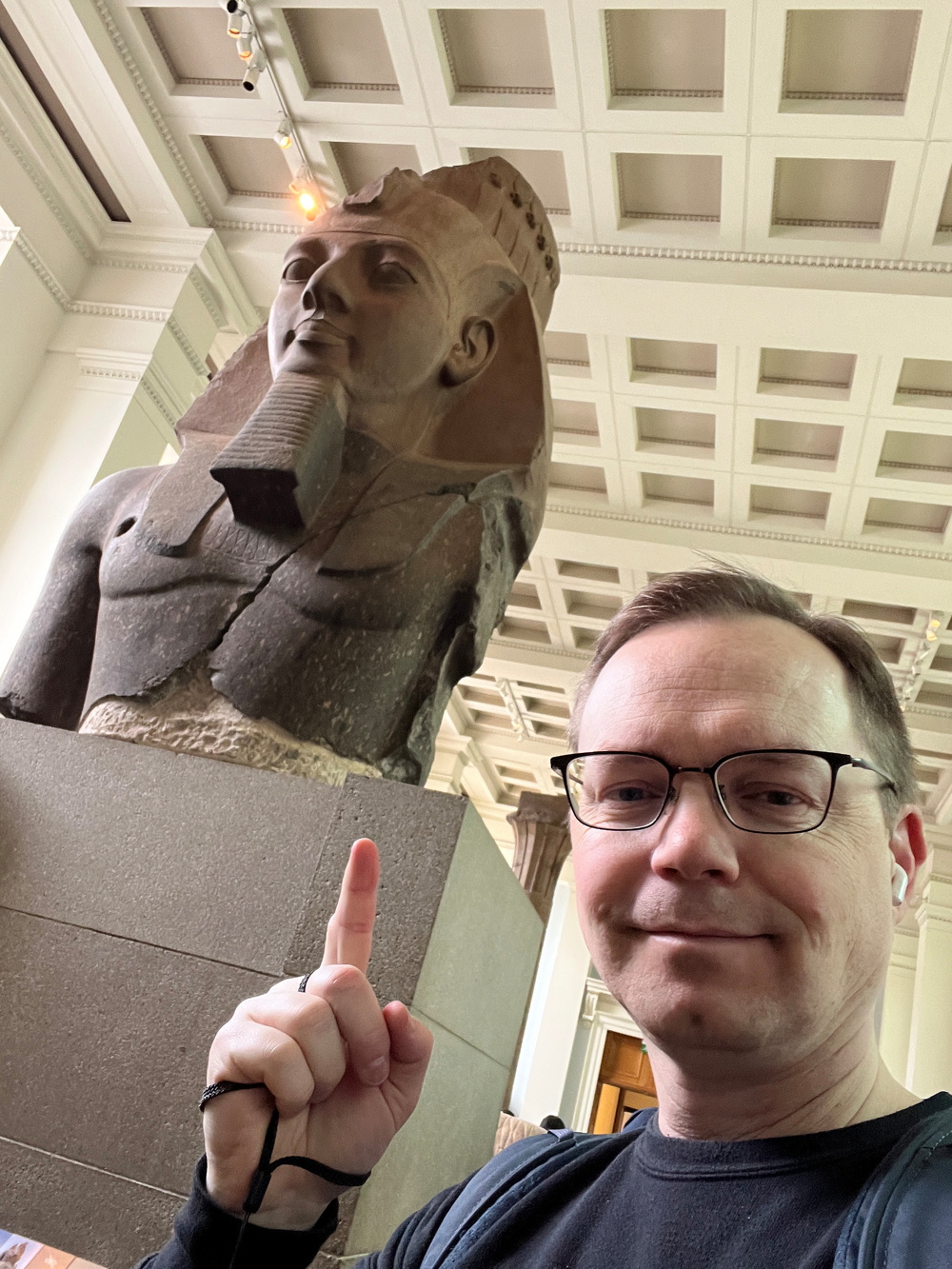
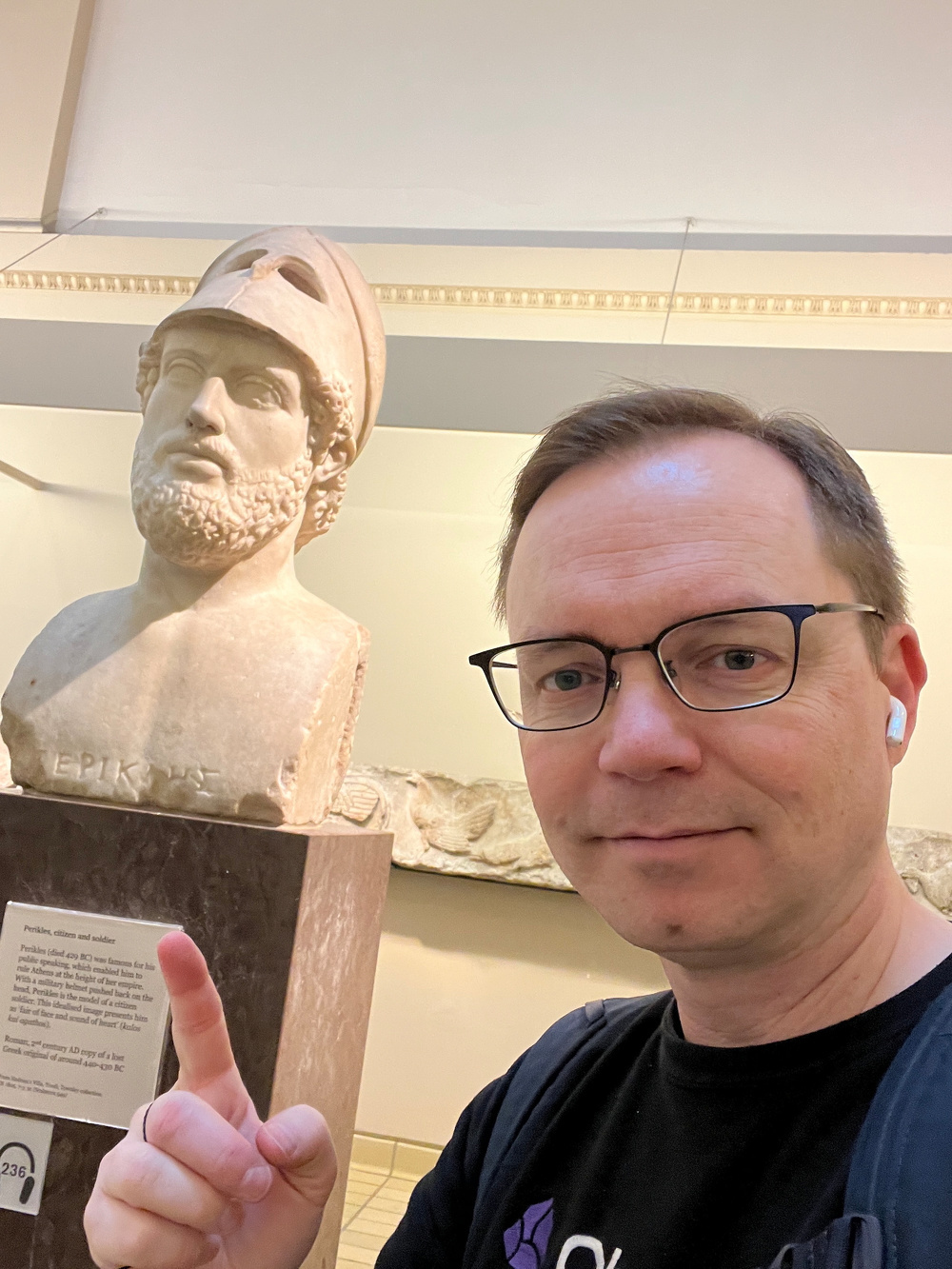
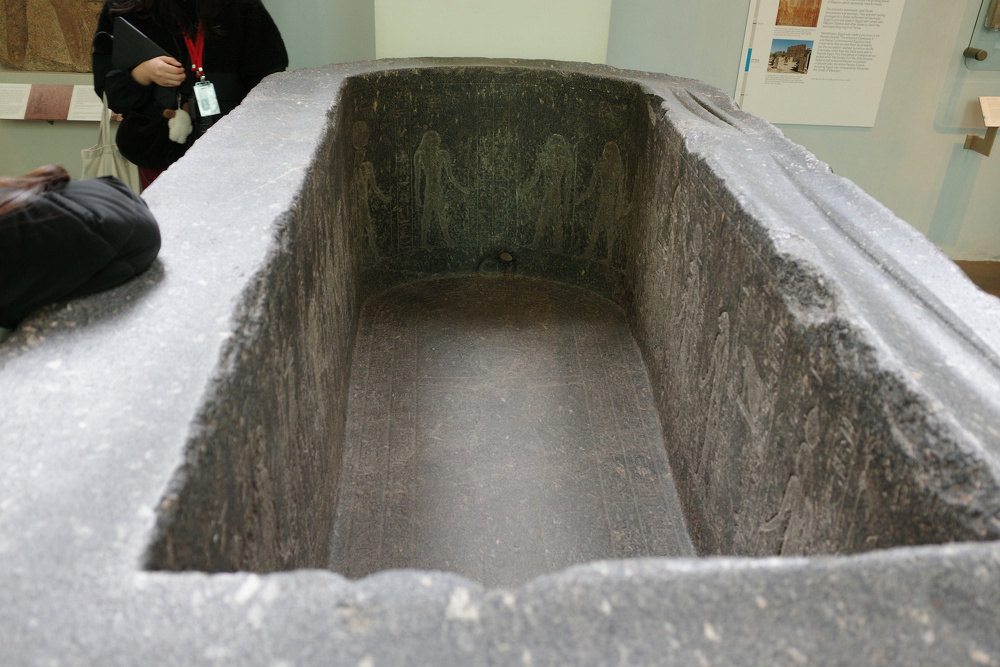
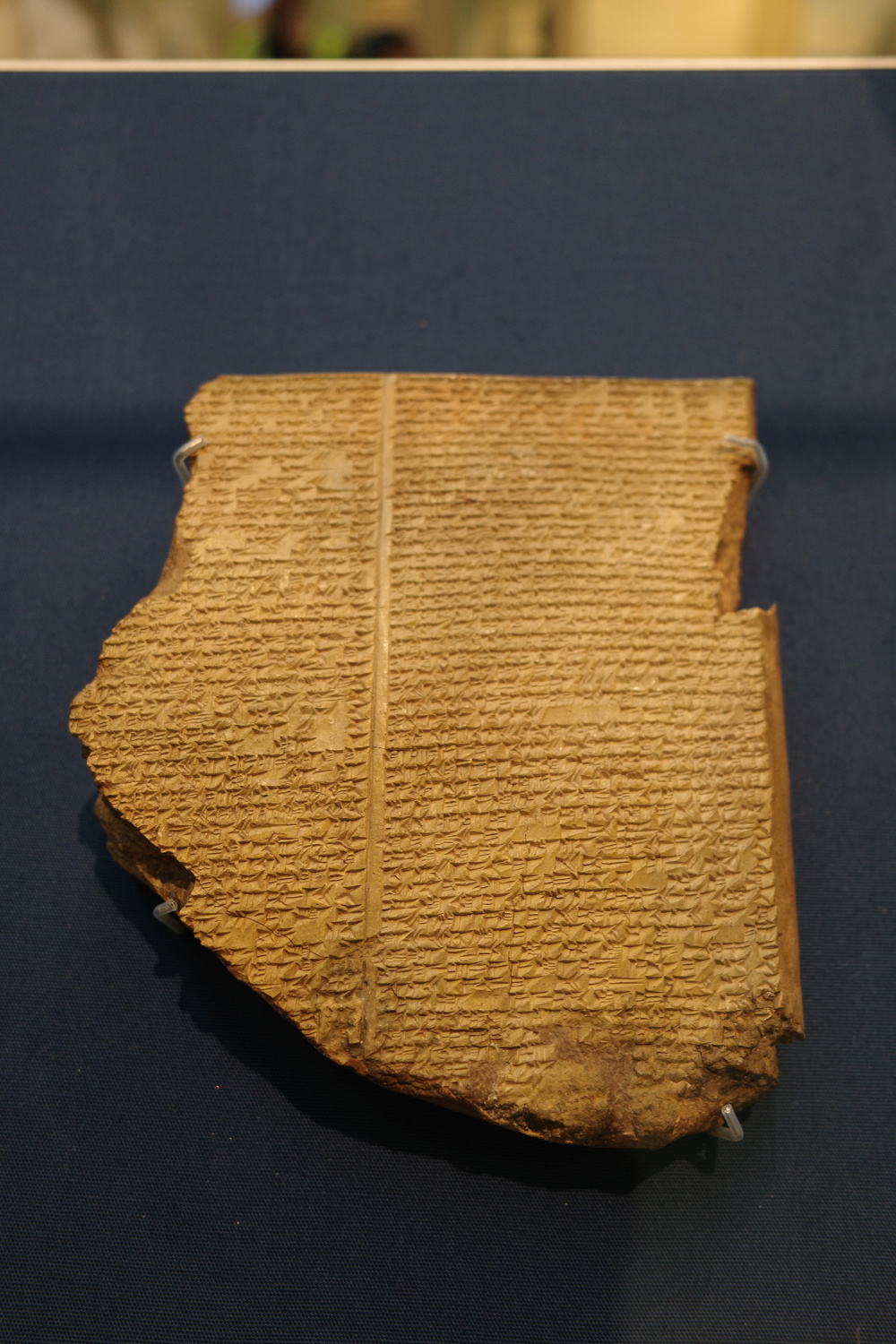
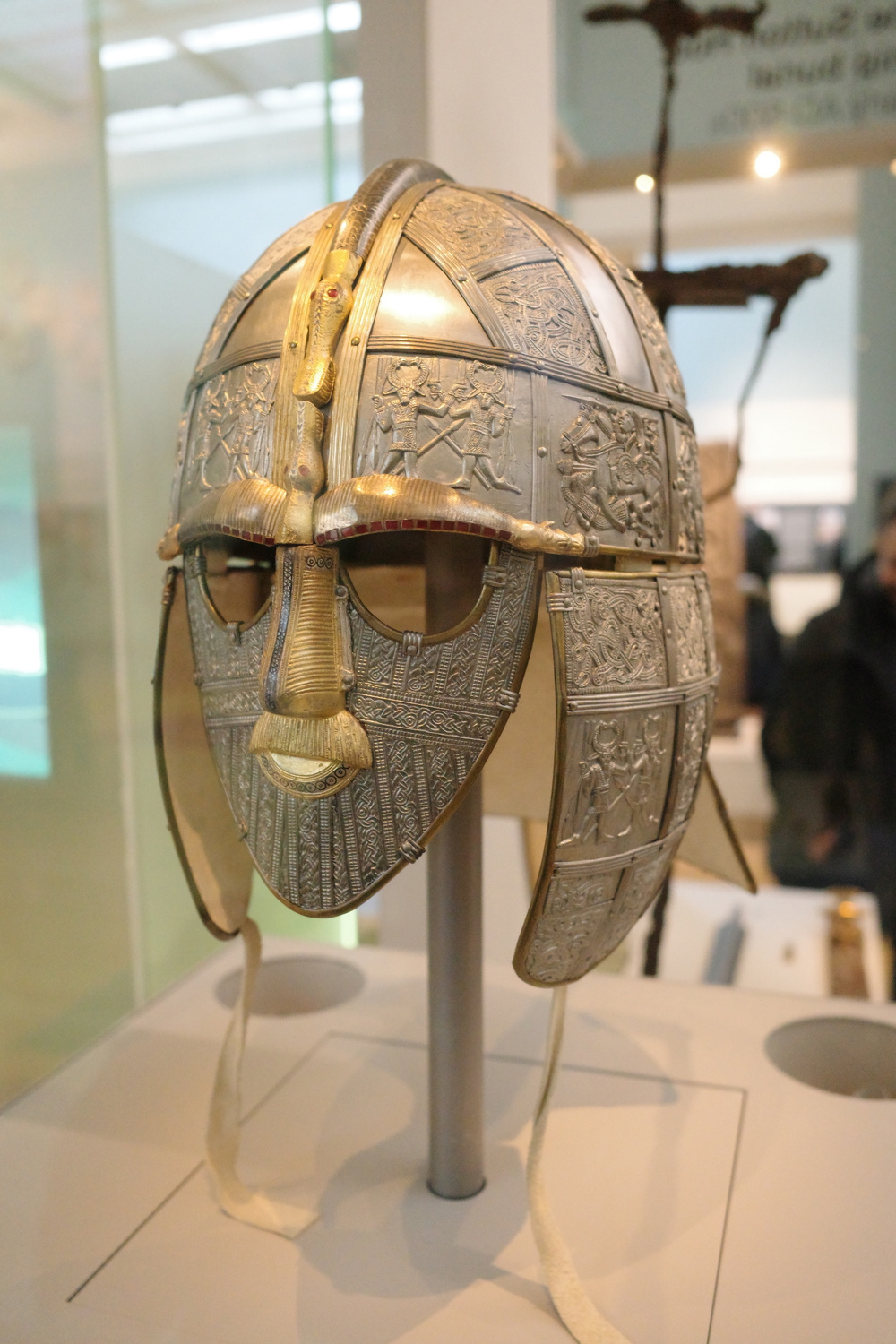
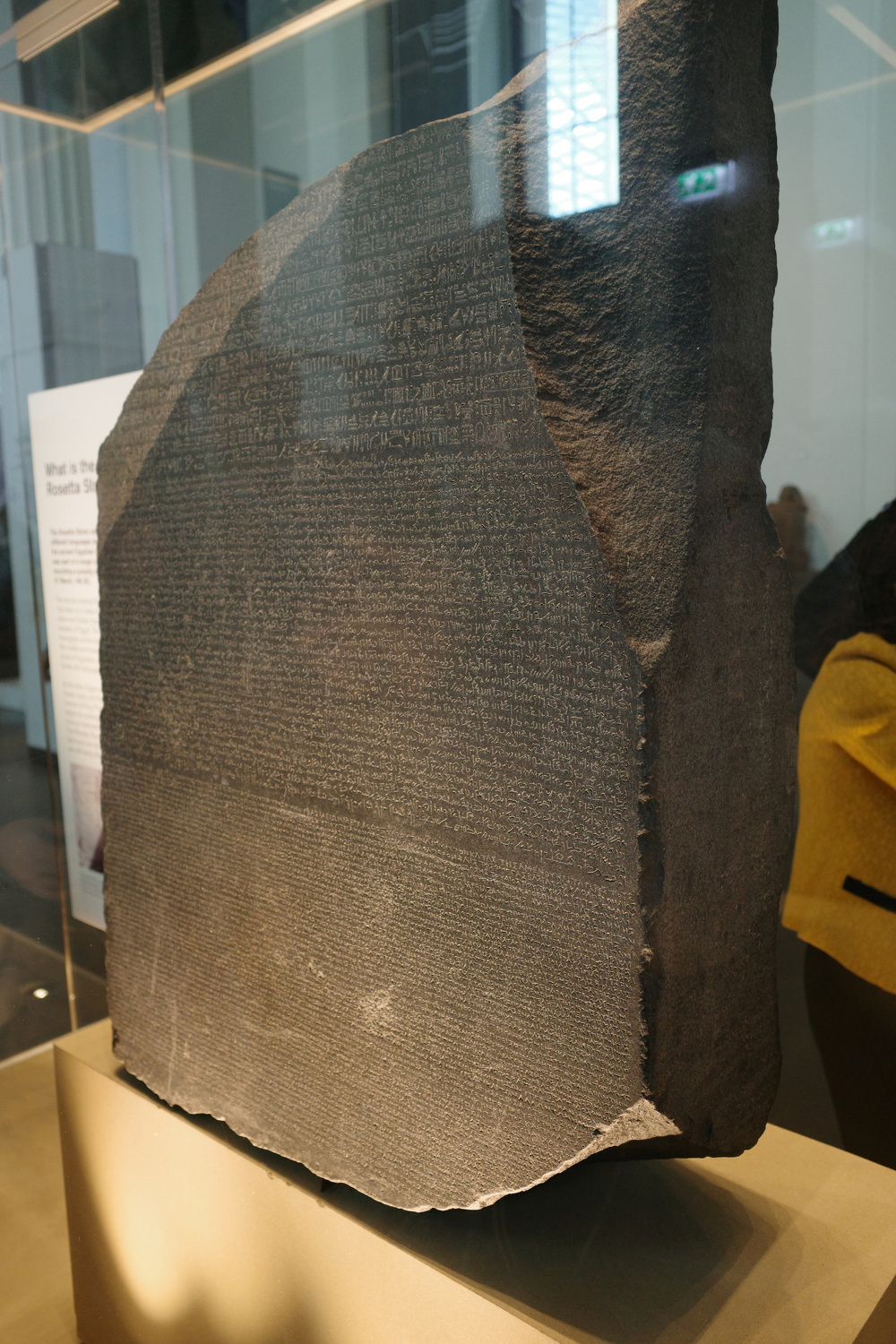
📸 See the whole British Museum album on Flickr →
Downloading the app and all the audio guide content, I listened as I walked through the ancient world, saw the Rosetta Stone, mummified cats, the Flood Tablet, tablets from Ur, the body of a man preserved in the Egyptian desert in 3500BC… The reading room in the center of the building was from a dream. And to think of the famous people who have sat here doing research and writing their master works!

📸 See the whole British Museum album on Flickr →
The section on Roman Britain and the gorgeous Sutton Hoo belt buckle helped me situate early British history. In Canada we only really learn about British history from the beginning of our country, which means the history of the Empire from the 16th C. Learning about when Britain was invaded by the Roman Empire, and subsequently by the Angles, Jutes, and Saxons, before the Normans took over in 1066 was interesting to someone who had heard of all those things but never seen them put together in a cohesive narrative. As I walked through I was constructing a comparative timeline with Japan, how the Yayoi, Nara, and Heian periods lined up with the Romans leaving Britain in 410, the battles leading up to the Heptarchy and the English finally united under Æthelstan. In front of me were the artefacts of deep history going back two thousand years and my eyes were wide open.
This is what struck me in London: this was a “deep history” that I actually had a connection to. All my life I had studied the deep histories of Japan and other parts of Asia, tromping through jungles to see monuments to ancient and foreign gods, traveling over the desert trade routes of the Silk Road from the Roof of the World to caravanserais in modern day Iran. For the first time I felt a connection to my own deep history.
My great-grandfather came to Canada from Britain at the age of 7, an orphan brought over to the new country effectively as labour to work on farms. There were many like him. Frontier folk that came to the New World as settlers typically did not have the wherewithal to maintain strong cultural heritage practices, especially out West. Every day was a struggle to survive. Only rich settlers could thrive and carry on their legacy (and authority) here. As a fourth generation Canadian I lost all historical cultural connections, from both sides of my family, long ago. My history only goes back to the person who came over from “the old country” and my cultural heritage is basically the Sears catalog of the 1980s. Some immigrant communities do an excellent job maintaining their culture in Canada, especially nowadays. But I think there are many settlers in North America like me that had their cultural heritage cut off just a few generations before and have a sort of hole in their identity. I think I met many of those people when I lived in Japan and was studying Classical Japanese culture.
The ”deep history” of Turtle Island is all the fascinating histories of the indigenous nations. But that is not my heritage. In London I caught a glimpse of a cultural heritage that I actually belonged to… and it excited me!
So with this new insight inside me, I finished navigating the European halls of the British Museum, strolled through East Asia and India, seeing statues of the Buddha that I was well familiar with from my own studies. The Chinese art section was pretty good, and full of Chinese tour groups, but not as impressive as the National Museum in Taipei. Even though I was going at a fast pace I still spotted some treasures from Tibet brought back by Sir Francis Younghusband (a character I have a certain attachment to 😉). The final area I visited was the African section where I saw some amazing masks, dangerous looking throwing knives, and unwieldy money.
One last jaunt
I left the British Museum about 4PM filled with the desire to return. Heading south I walked Shaftesbury Ave where all the theatre shows are, past Chinatown, and to Leicester Square packed with couples out for the evening. I took Charing Cross Road to the famous Trafalgar Square where talented street performers busked for tourists. It was getting near 5 and I was starving. I wanted to have one last fish & chips before leaving the UK. Crossing Trafalgar I spotted a row of Canadian flags… it was Canada House, where the Canadian High Commission is located! I took some proud selfies in front of the maple-leaf-carved doors. Britain might be were my deep history is, but I AM CANADIAN 🍁 😀
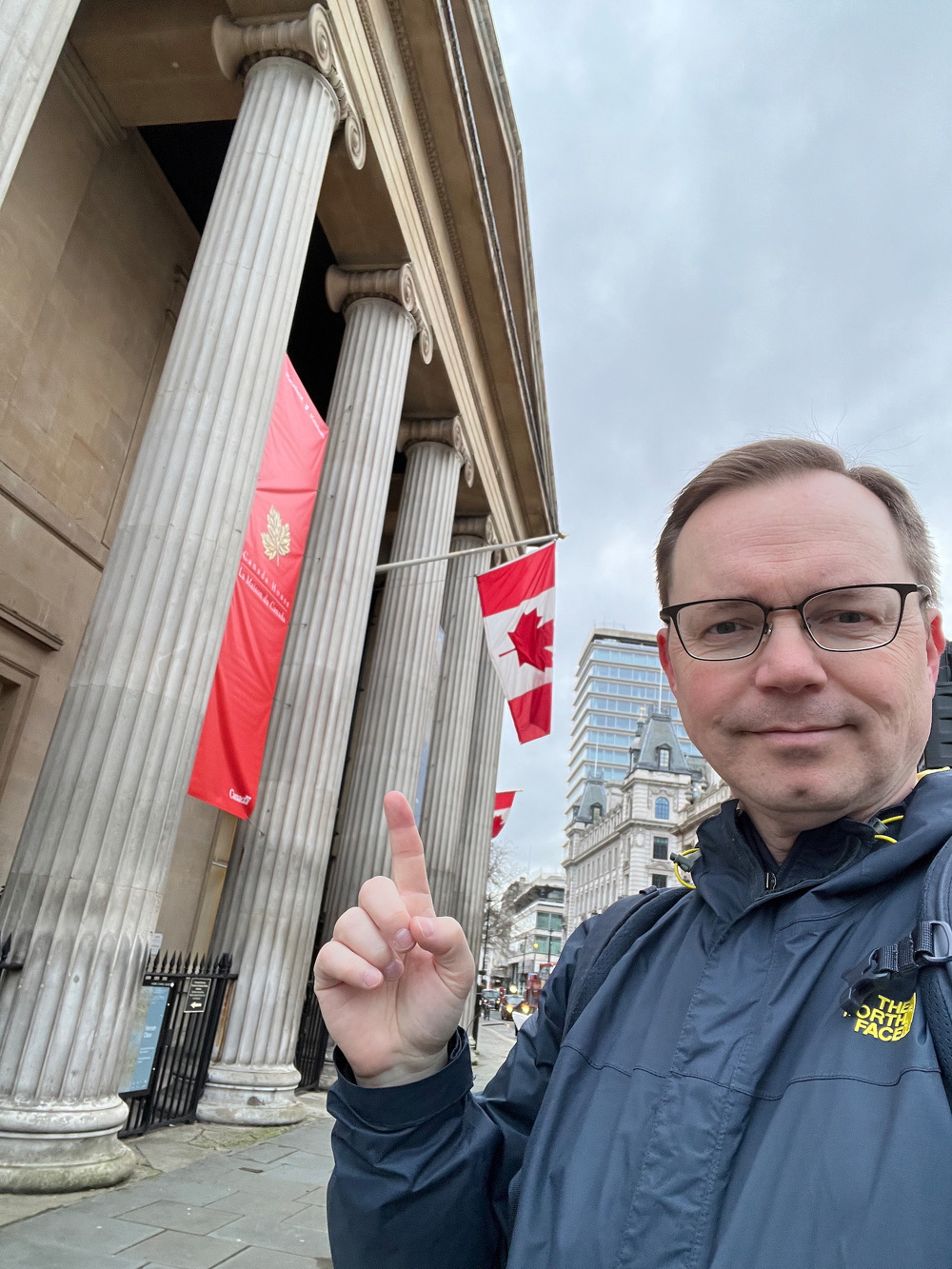
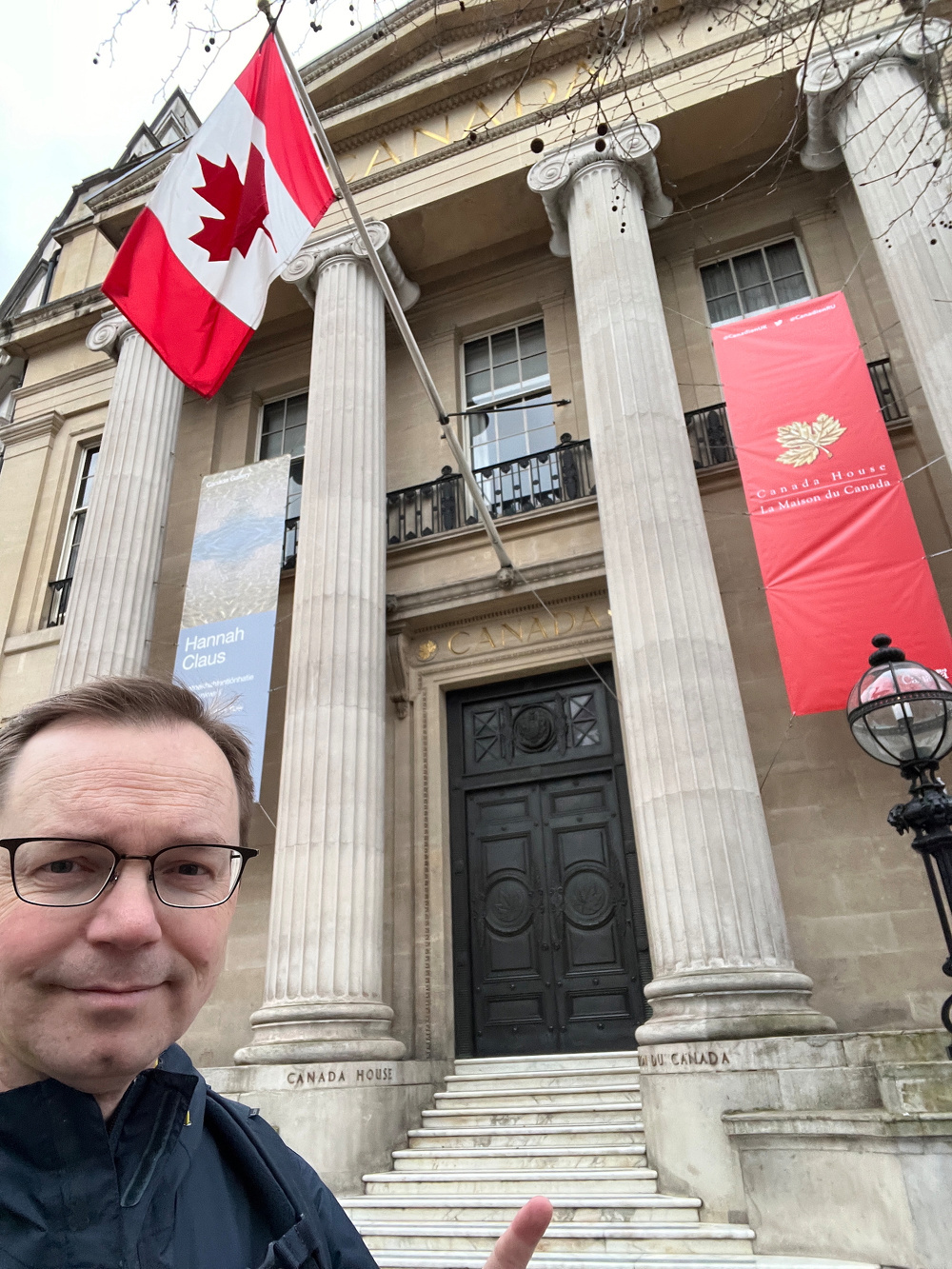
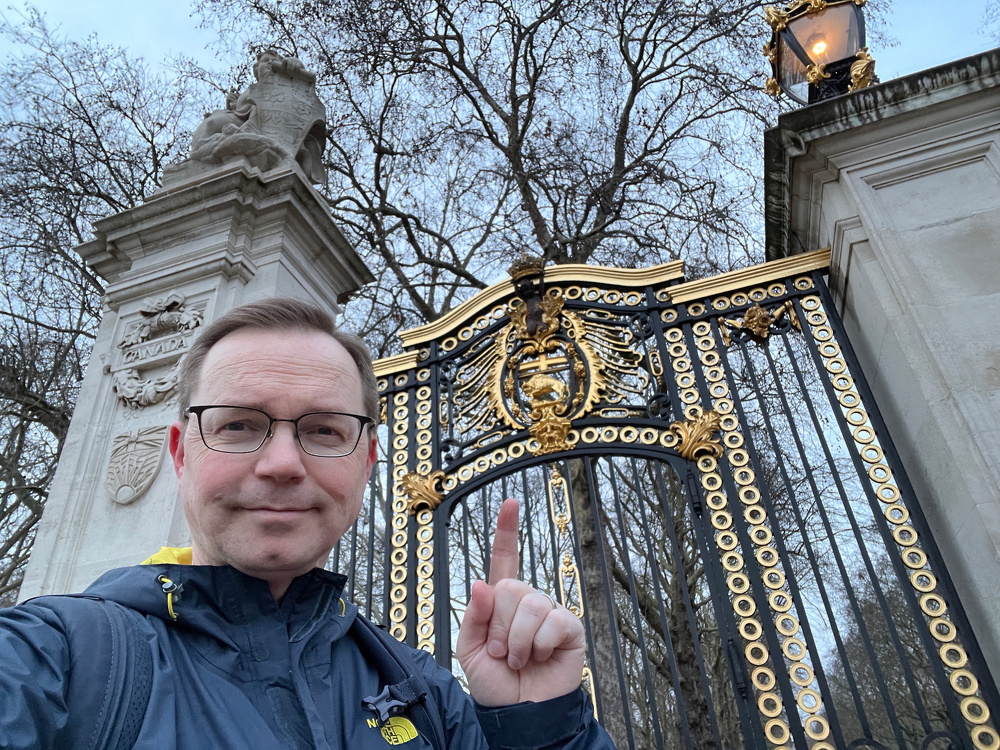
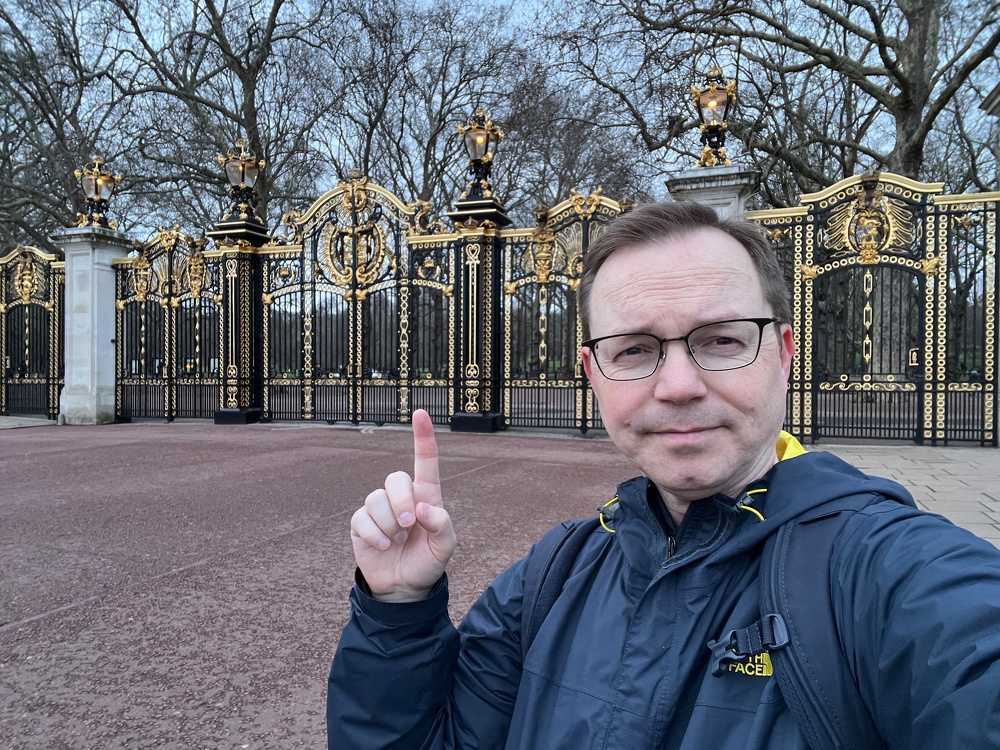
Opening up my map I looked for a place to eat and realized just how close I was to Buckingham Palace. It was still light, so I pushed myself and hoofed it down The Mall. Most people were going in the other direction. One of the sites I had flagged before going to London was Canada Gate, the elaborate entrance to the Green Park just north of Buckingham. Luckily I still had the light to capture some shots. Even though it was getting dark and all the gates were closed there were more than a hundred people in front of the Palace taking photos. I got mine and then headed towards Victoria Station looking for a well-rated pub.
Along the way were modern pubs with big screen TVs showing the Sunday night football matches to people drinking on the patio with the serious faces of heavily invested fans. Off in the distance I heard chanting… was I close to a stadium? According to the map Stamford Bridge (home to Chelsea FC) was quite far away. Wow, those chanters are loud! I thought. When I rounded the bend I found myself smack dab in the middle of a giant pro-Iranian monarchy demonstration! A massive line of marchers waving huge flags chanting the name of the Pahlavi Shah in exile, escorted by uniformed Met Officers, had completely taken over Victoria Street, blocking my path. I ducked into a nearby pub to get some food and wait out the protest. Then I caught the metro from Victoria station back home to Brick Lane.

Conclusion
Three days are all I had to explore London. Then it was back to Heathrow with sore feet answering emails from my event and eating my fourth serving of fish & chips for the week (they were all different! Seriously! And so much better than Canada). London is a global city like New York and Tokyo, both of which I have enjoyed. But I made a connection with London that I haven’t with those other cities… and I was not expecting that at all. Immediately I bought a book about early British history, and I am already planning to go back in April on my way to Germany. I need to return to the British Museum. And this time I was not able to reserve a showing at the Royal Geographic Society. Plus, I now have friends and an interesting community to visit when I am in the city (see this post).
My brother and I had always said one day we would like to go to England and from there to Ireland and Scotland to explore our lost past. Just three enjoyable days in London validated that dream, and I am very much motivated to explore the isles more fully in the coming years.