London, Part 2 — Another trip report
After my first visit to London in February I knew I had to return. So I did a 4 day stopover on my way to Germany for a wedding.
On the first day I journeyed to South Kensington on the metro to read Younghusband’s journals at the Royal Geographic Society. This was scheduled since there was a Tube strike planned from my second day. That was also the reason I decided to stay in Bloomsbury, a more central location, allowing me to walk to most of the other places I wanted to visit during the few days I was in the UK.
Samurai at the British Museum
My hotel by Bloomsbury Square was right beside the British Museum. Last February I spent 6 hours just wandering the free (as in beer) halls of that massive building. This time I went with the goal of spending more time in the Anglo-Saxon area with the Sutton Hoo belt buckle, and then visiting the paid exhibition Samurai co-curated by Oleg Benesch, an academic I have followed for a while.
Having lived and traveled around Japan for 13 years, dedicated a goodly amount of time studying classical martial arts and nearly obtaining a minor in Japanese history (focused on the Warring States Period), my expectations of this exhibition were truthfully… pretty snobbish. But wow was I blown away! The exhibition contained so many amazing artifacts from collectors outside of Japan, that anyone inside of Japan would be jealous!
The point of the exhibition is to disabuse popular ideas of what the samurai were. They are not the Asian analogue of chivalric knights following some common code of conduct. The exhibition opens with clips from the Netflix series Shōgun and ends with a display of modern adaptations of the samurai image including the original costume of Darth Vader.
My assessment was the exhibition does an excellent job of teaching people about the “real” samurai. My only complaint was about the six or seven suits of armour that were placed here and there were not actually placed in the right point in timeline, which is fine I suppose, but there was no explanation that “even though we are talking about the Kamakura period note that this armour has metal plates which is a property of late 16th century armour due to the introduction of guns by the Portuguese”… yes, I am being a little pedantic, and don’t let that take away from the effort which I think was done very well and I expect it to be effective in changing non-specialist impressions of the samurai.
(And just to be a little more pedantic, please forgive me, I would have to say the gift shop was also pretty crass with a bunch of its merchandise. But what can you expect? It’s a gift shop, not an art gallery. The book that was produced for the exhibition is pretty excellent though.)
Some notable items:
- portrait of Itō Mancio!
- perfect 12th C Heart Sutra with gold ink on indigo paper
- a really nice display of different spear types
- some really excellent bows
- Marishiten arrowhead!
- tsuba (sword guard) collections are always great… but they had no info about them unfortunately
- so many Ukiyo-e owned by the British Museum that you could never see in Japan!
Listen to this excellent interview with Oleg and his co-curator Rosina Buckland (from the British Museum) to get some more insight of why and how they put Samurai together.
📸 See all the images in full screen on Flickr →

The joy of books at the British Library
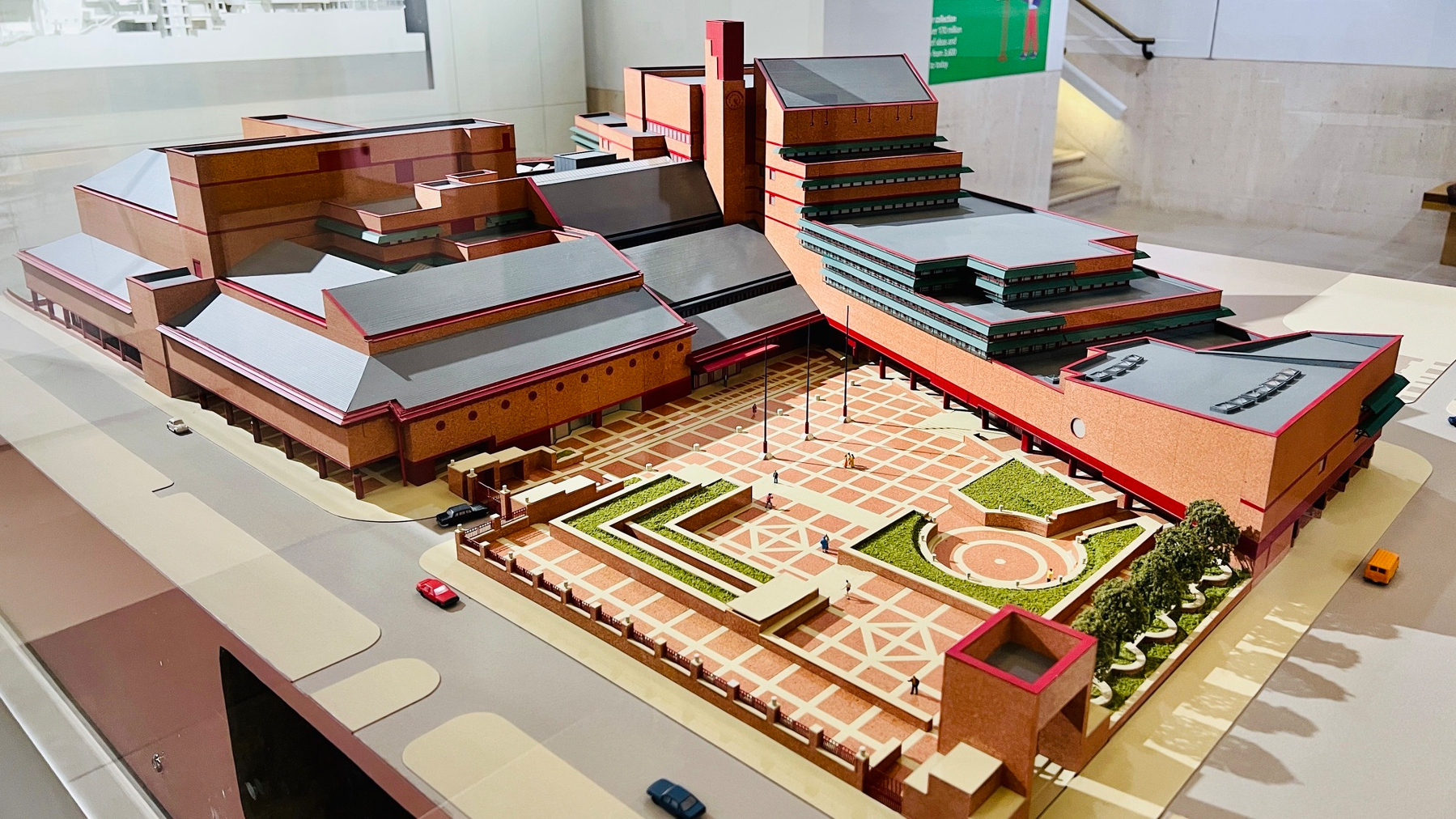
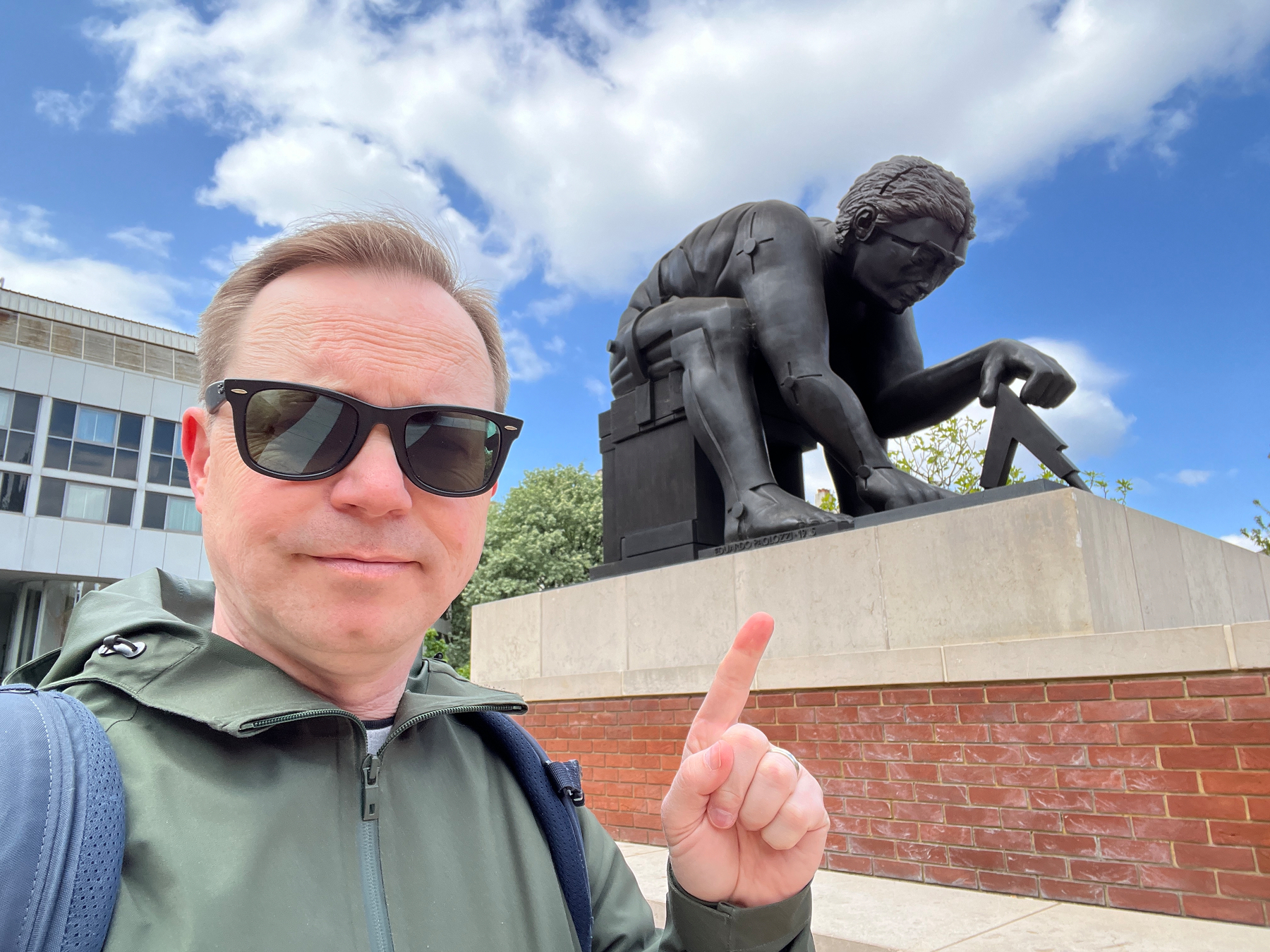
A few blocks north of the British Museum, under the looming towers of St Pancras Station is the modern British Library, a long modernist building with sweeping curves and a blocky modernist statue of Sir Isaac Newton at the entrance. The British Library is the national library, similar to the American Library of Congress, so it has a massive responsibility and collection.
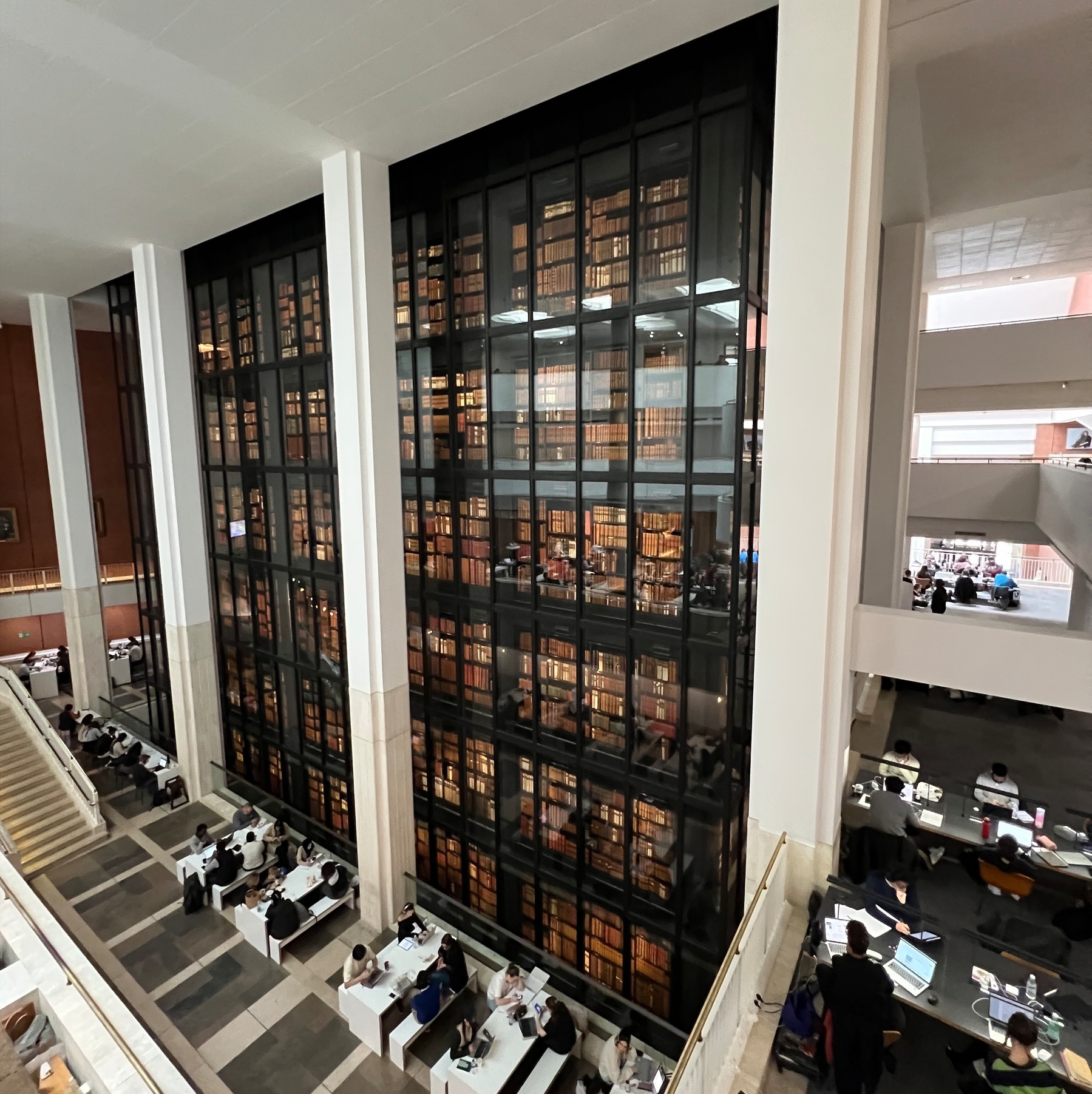
The lobby area is open to the public and there was a lot of public there when I arrived. All tables were packed, people were sitting on the floors, the cafe was full. Even the library bookstore was crowded. I have no idea what it was like behind the locked doors of the actual stacks, for which you needed a pass to get in. The center of the library is a 3 storey tall class case called The King’s Library. A case makes it sound small, but it is actually three stacked rooms with a locked entrance on the first floor. The external walls were all glass letting you see the ancient books on display. I don’t think you could even access those books from the inside. There was a little elevator tucked out of sight for when a librarian needed to retrieve a volume.
The reason I came to the library was for the treasures. And oh! Treasures they were! I saw many fabulous printed works, notably:
- the fourth Bible printed off of Gutenberg’s machine from 1462
- Codex Sinaiticus, the earliest surviving complete New Testament from the 4th C
- one of the four surviving copies of Magna Carta
- A copy of the Zoroastrian religious code from Yazd, Iran, dated to 1647
- a multi-lingual Bible from the early 1500s with Greek, Latin, Aramaic, and Hebrew
- wax tablets for homework from Egypt in the 2nd C
- 1000 year old woodblock print of the Avalokitesvara Sutra from Dunhuang
- Proclamation of Emancipation from 1865
- a 17th C copy of 百人一首 One Hundred Poets
- a bunch of Shakespeare’s folios from the time
- a page from Leonardo Da Vinci’s sketchbook
- Beethoven’s super messy sketchbook
- the handwritten script for Monty Python’s famous Spanish Inquisition sketch
- tons of gorgeously illuminated texts that sparkled in the low overhead lights
- and so much more!!
Unfortunately the Lindisfarne Gospels (video overview) were taken out of rotation just weeks before I arrived. I was really looking forward to seeing that!
I don’t really know what else to say than being at the British Library just hammered home the importance of physical books, and how they can be such beautiful objects: portable temple’s to knowledge, history, and legacy. We need to keep making them.
I really regret not being able to show you any photos. I am obviously not used to my fancy new camera, and even though I took a million pics, they are all out of focus! (unless that is some sort of fancy new security feature the museum has in place).
More time at Newspeak House
After visiting the British Library and seeing Platform 9¾ I walked across London all the way to the East End and back to Newspeak House, getting lost in the Barbican and stopping by Christ Church Spitalfields in homage to the novel Hawksmoor which I read after my first trip when I stayed near the church.
I previously wrote lovingly about Newspeak so it is no surprise that I turned up again, and in fact came twice. First was for a meetup of the Journalism Technology London Meetup where I gave a little talk, and then again the next night for Ration Club, their weekly free community meal. We had baked potatoes with a million different toppings and I was there until 1:30am talking about Oakeshott and Rawls. Love Newspeak.
What else
On my final day in the city I enjoyed the lovely weather I walked from my hotel down Whitehall to see all the various statues and the Horse Guards. I took more selfies with Big Ben but in the day time. Wow he is shiny! And I got a shot of the statue of Boudicca now that I know who she is. From there I ate lunch in an old pub that when I left had an Italian tour group stopped in front to admire it, and visited Westminster Abbey (my full review here). That was impressive. From there I spent the rest of the afternoon hanging out on Pall Mall and Piccadilly, enjoying the sun and people watching before heading back to my hotel and packing for the morrow.
The next morning the Tube strike was still on so took a taxi to the DLR station at Tower Hill and rode out to London City airport where I caught a short flight to Frankfurt and the next leg of my journey which I will cover next time. 👋
That’s the end of this short trip report! I thoroughly enjoyed it. The weather was brilliant and I was in a great spot. I am sure I could visit a dozen more times and still have fun, but next time I go to the UK I would like to see some other communities (like Bristol!).
See all my photos on Flickr:
- London April 2026 (All)
- 🧭 Royal Geographical Society (and read the post about Younghusband’s Journals)
- 🏛️ British Museum and the SAMURAI exhibition
- ⛪ Westminster Abbey (read the trip report)